Start with a small, clear purpose
After military service, getting to know a neighborhood can take time. A shared resource list offers a low-pressure way to participate: you can learn what is nearby while working alongside other residents. The goal is not to produce a complete directory. It is to make a few useful places and opportunities easier to find.
Choose an audience and a narrow scope before collecting entries. A list for people looking for casual ways to meet neighbors might include a library, a community garden, public recreation spaces and recurring open activities. A list for new residents might focus instead on gathering places and public notice boards. Define a small area, such as several nearby blocks, and agree on what belongs on the list. That decision will make the project easier to finish and explain.
Invite contributions without assigning everyone a job
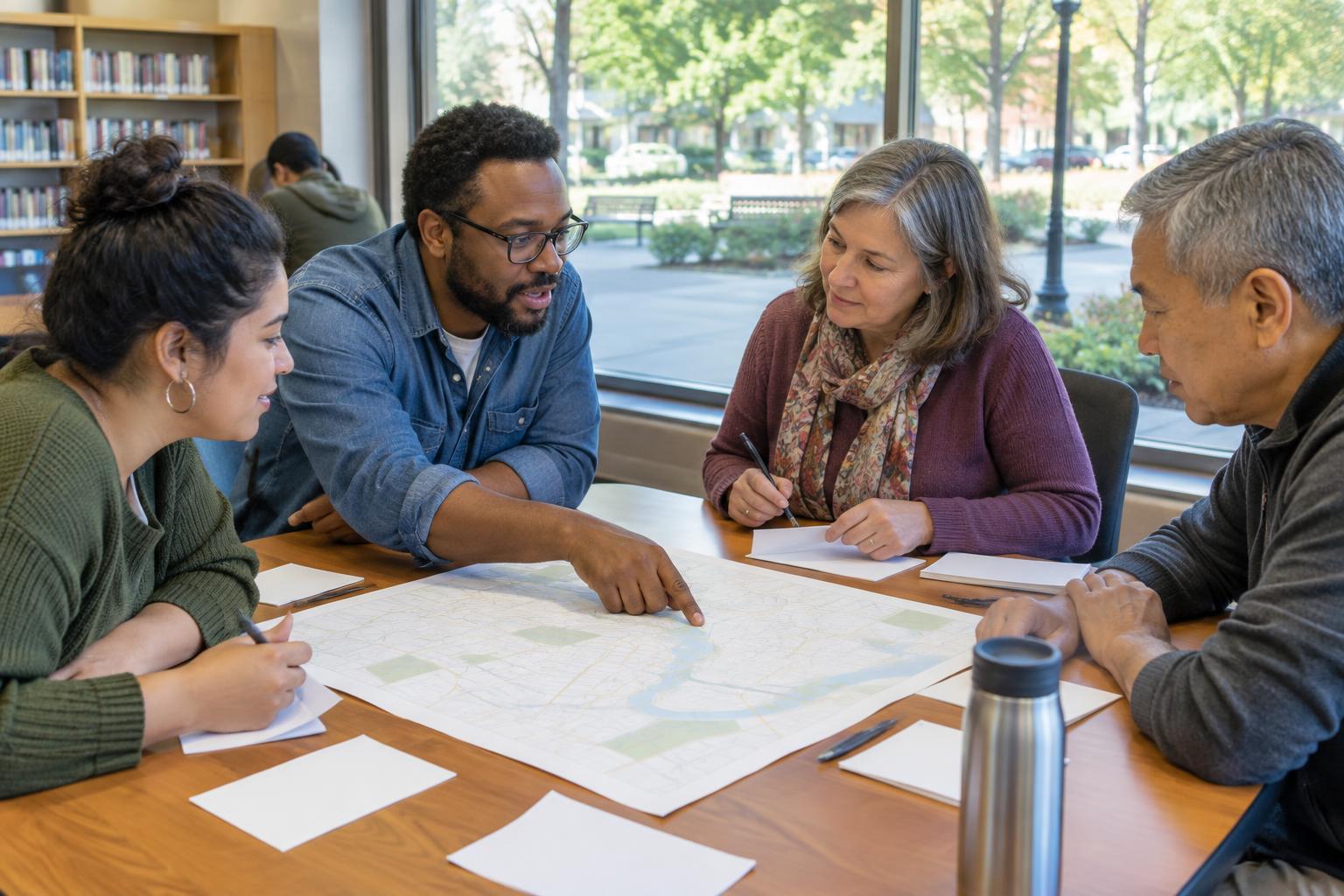
Begin by asking a few neighbors what they wish they had known when they first arrived. A conversation at an existing gathering or a short message to a local group can reveal useful categories. Invite people to suggest entries, check a detail or review a draft. Some may have time for only one suggestion; that is still a contribution. If you are accustomed to coordinating a team, resist the urge to set a schedule for others before you know who wants to help.
Agree on a simple format so contributions are easy to combine. For each entry, record the name, a brief description, its general location, where to check for updates and the date someone last checked the details. Keep descriptions neutral: “public reading room with community notices” is more useful than “the best place to meet people.” You can group entries under headings such as outdoor spaces, learning opportunities and informal gathering spots.
Check details and respect boundaries
A resource list becomes frustrating if it sends someone to a closed venue or presents an invitation-only activity as open to everyone. Before sharing the draft, check practical details through the organization or venue that provides them when possible. If you cannot confirm a schedule or participation rule, leave it out or tell readers to check directly. Avoid implying that your list is an official guide or that a listed place has endorsed it.
Keep personal information out of the project unless someone has clearly agreed to share it. A neighbor’s phone number, home address or private group chat may seem helpful, but it can create an unwanted obligation for that person. For activities run by individuals, ask how they would like people to get in touch—or list a public contact point instead. If residents disagree about whether an entry belongs, return to the purpose of the list rather than trying to settle which suggestion is more valuable.
Share a usable version and plan for change
Make the first version easy to scan. Short descriptions and clear categories usually help more than a long account of each place. If you print copies, consider whether the text is readable and where people are likely to pick one up with permission. If you share it digitally, use a format people can open without joining a private group. Ask one or two residents who did not help compile it to try finding an entry; their questions may show what needs clarification.
Decide who can suggest corrections and how often the list will be reviewed. A note such as “details may change; check with the venue before visiting” sets a reasonable expectation, but it does not replace occasional updates. It is fine to keep the list short or retire it if no one can maintain it. Even a modest first version can give neighbors a reason to talk, share what they know and discover a place together.