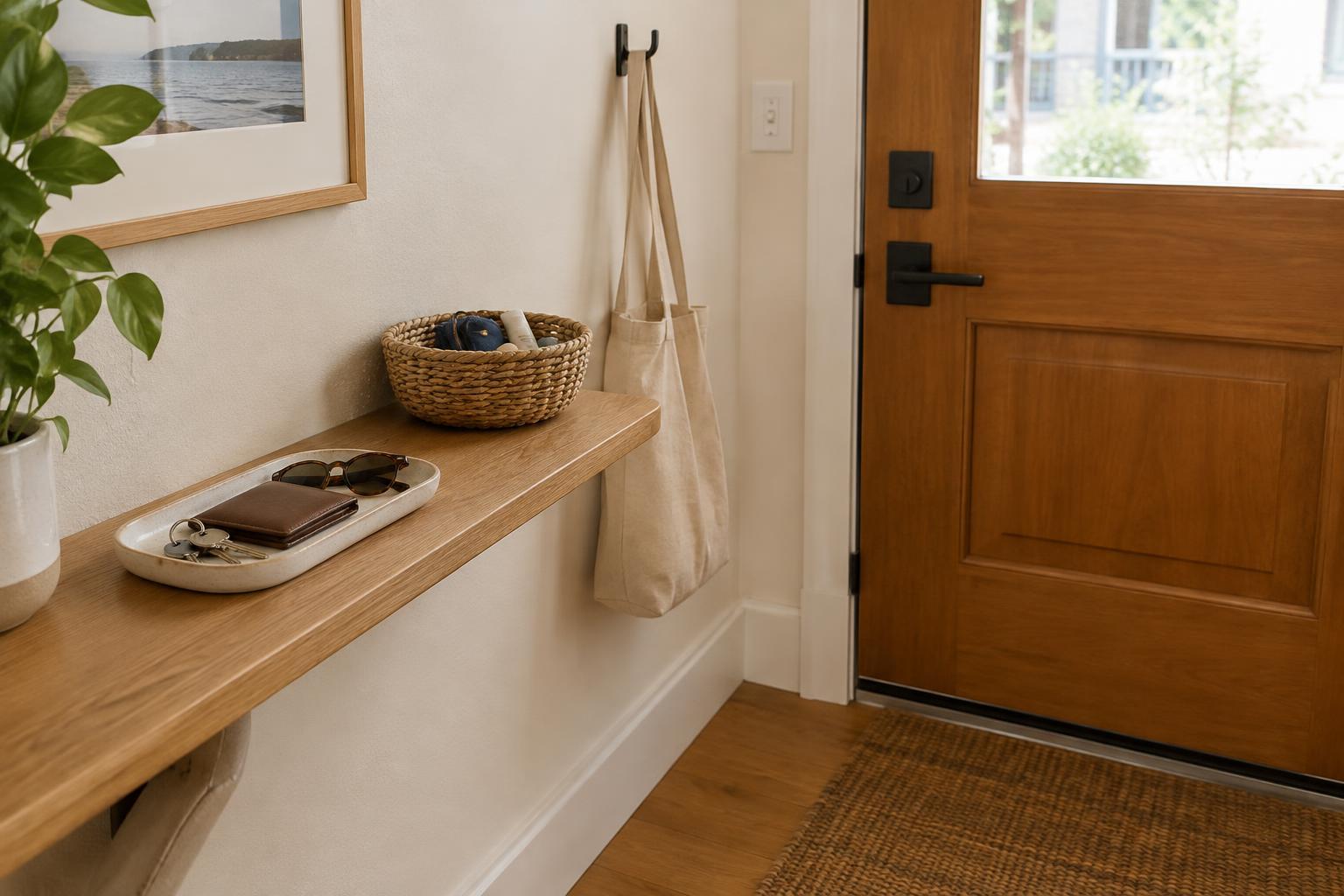
Give the reset a small job
A household reset is not a deep clean or a promise to finish every unfinished task. Its job is to notice loose ends, put a few things back where they belong and decide what needs attention next. That smaller definition makes the routine easier to repeat, especially when a week has been busy or unpredictable.
Choose a time when you can usually spare 20 to 30 minutes, but treat that as a guide rather than a rule. A quiet weekend morning may work for one household; an evening before the workweek may suit another. If your schedule changes often, attach the reset to an event instead of a day, such as after grocery shopping or before planning the next week. Keep a notepad or one digital list nearby so you can record tasks without stopping to do them all.
Start with the places where loose ends collect
Walk through a few high-traffic spots: the entryway, kitchen counter, desk and the place where bags or mail tend to land. Put away obvious strays, discard unwanted packaging and gather papers that need a decision. Do not let one crowded drawer turn the reset into an organizing project. If a space needs more work, write it on your list for another time.
Give incoming items a simple destination. A receipt you need to keep can go in a designated folder; a form awaiting action can go in an action tray; a library book can go by the door. The goal is not a perfect filing system. It is to reduce the number of things you have to rediscover when you are trying to leave home, pay a bill or find a document.
Check the coming week and the household basics
Look at your calendar, messages and any notes left from the previous week. Confirm upcoming appointments, deadlines, pickups and shared commitments. If other people in the household rely on the plan, take a moment to compare calendars rather than assuming everyone has the same information. Write down preparation steps that could otherwise be missed, such as setting out an item to bring or allowing travel time.
Next, scan a short list of supplies and routine chores. You might check food for a few planned meals, laundry needs, toiletries, pet supplies or anything your household uses regularly. Add missing items to a shopping list instead of relying on memory. For someone adjusting from a more structured service environment to a self-directed civilian routine, a visible checklist can provide a useful prompt without requiring a rigid schedule.
Sort tasks instead of chasing every task
Review the loose ends you have collected and give each one a next step. Some can be finished in a minute or two, such as putting a document in its folder or adding an appointment to the calendar. Others need a separate block of time. Write those as specific actions: “find the form” is more useful than “sort paperwork,” and “ask Sam about Saturday” is clearer than “weekend plans.”
Keep the weekly list short enough to be usable. Pick a few priorities, then leave lower-urgency tasks on a separate list for later review. If an item has appeared for several weeks, ask whether it still matters, needs to be broken into a smaller step or depends on someone else. The reset succeeds when you know what to do next, not when every item is complete.
Make it easy to return next week
End by clearing the work surface you used, placing your list where you will see it and choosing the first action for the week ahead. A simple order can help: collect, check, decide, stop. If you share a home, you can divide these steps or use a brief conversation to identify anything that affects everyone. The routine should fit the household rather than require everyone to adopt the same method.
Some weeks, the reset may take only ten minutes; other weeks, it may reveal a project that deserves its own time. Either outcome is useful. Repeating a modest check-in gives small obligations a regular place to surface, so they are less likely to compete for attention at inconvenient moments.