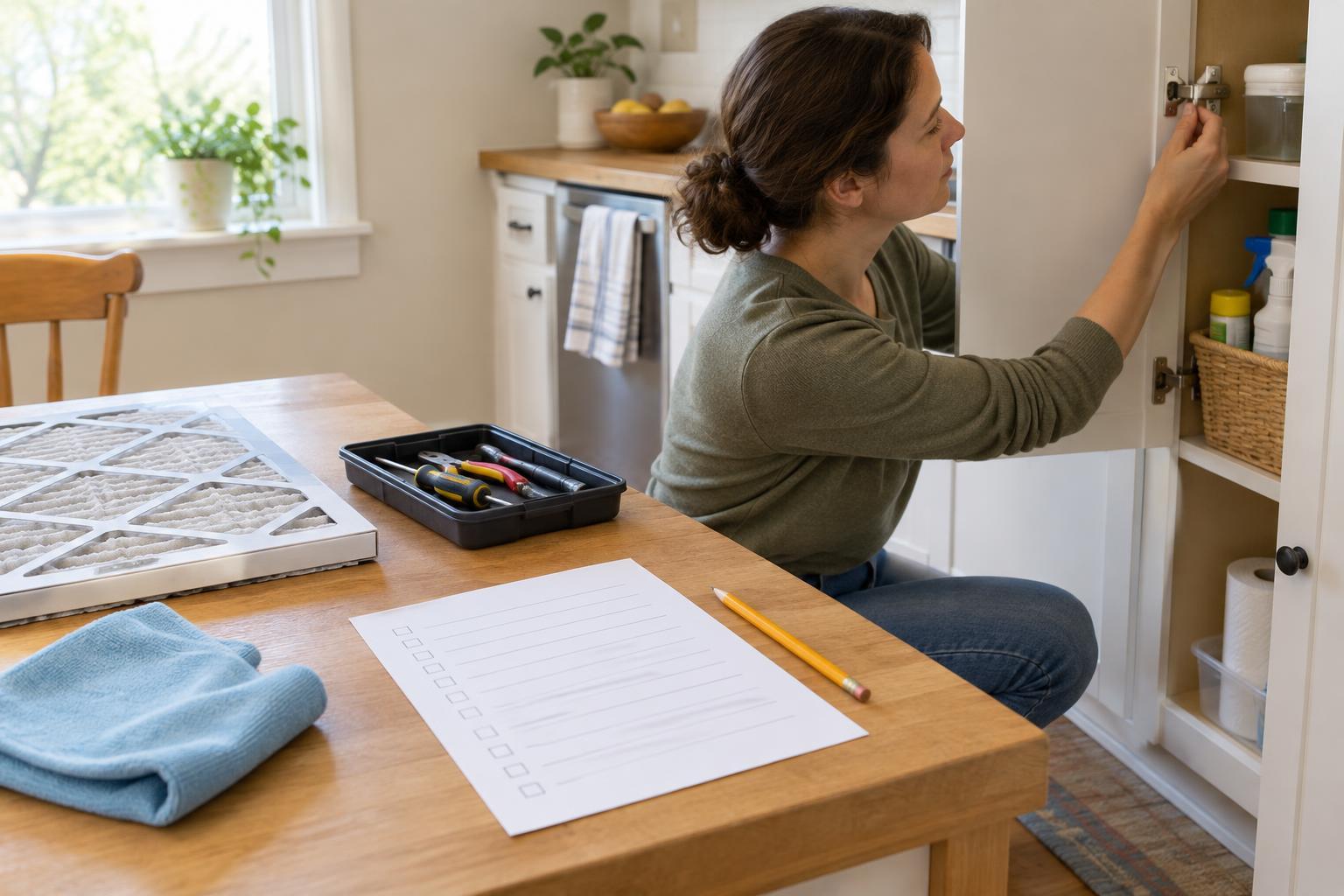
Start with the home you actually have
Home upkeep is easier to manage when it lives somewhere other than your memory. A checklist gives recurring tasks a place to land, so you do not have to keep noticing the same loose handle or wondering when you last checked an appliance. For someone settling into a new civilian routine, it can also turn an open-ended responsibility into a small set of actions that fit around work, learning, family, and rest.
Begin by walking through your living space and writing down what needs regular attention. Think in areas: kitchen, bathroom, living spaces, storage, entryways, and outdoor areas if you have them. Include only the systems and equipment you are responsible for. A renter’s list may focus on cleaning, spotting problems, and reporting repairs; a homeowner’s list may also include arranging service and keeping records. Your lease, appliance manuals, and local conditions can help you decide what belongs on the list.
Sort tasks by when they need attention
Give each item a rough interval rather than trying to schedule everything at once. A short weekly check might include looking for leaks under sinks, clearing obvious clutter around vents, and noting anything that has stopped working. Less frequent items might include cleaning appliance filters where the manual calls for it, testing household alarms according to their instructions, or checking whether doors and windows close properly. Seasonal items could include looking for weather-related wear or preparing equipment you use only part of the year.
Keep the wording specific enough that you know what to do. “Check kitchen” is easy to ignore; “look under the kitchen sink for moisture” is clearer. If a task depends on an appliance model, write “follow manual” beside it rather than relying on a general rule. You can group tasks by room or by frequency. Choose the arrangement that makes the next action easiest to find.
Make the checklist small enough to use
A useful checklist is not a complete inventory of everything that could ever go wrong. Start with a few recurring tasks you can reasonably finish. Put them on paper, in a notes app, or on a calendar you already use. If reminders help, set them for a time when you are likely to be home. If reminders become background noise, try one recurring upkeep session instead of a separate alert for every item.
During that session, work through the list and record only what matters: the date, whether the task was done, and any follow-up needed. An entry such as “bathroom sink: no leak seen” is enough. If you notice a concern, write down what you observed without assuming the cause. The checklist should reduce decisions, not become another demanding project.
Separate routine upkeep from repairs
A checklist can help you notice a problem, but it does not mean you must fix everything yourself. Make a separate “follow-up” area for issues that need a closer look, a landlord notification, or a qualified repair professional. This keeps unfinished repairs from getting lost among routine tasks. Include a note about whom to contact and, if useful, where to find a warranty, lease, or appliance manual.
Safety comes before completing the list. If a task involves electricity, gas, working at height, or equipment you do not understand, do not treat it as a routine do-it-yourself job. Follow the equipment instructions and seek appropriate help. For a rental, check which responsibilities belong to you and which should be reported to the property manager. A clear report of what you noticed and when is often more useful than a guess about the repair.
Review and adjust the list
After a month or two of using the checklist, look at what you completed and what you repeatedly skipped. A skipped task may need a better reminder, a clearer description, or a different interval. Remove items that do not apply, and add new ones when you bring in equipment or move to a different home. Keep manuals and service information in one easy-to-find folder, whether physical or digital, so the checklist can point you to the details without copying them all.
The goal is steady awareness, not a perfect record. A brief check and a dated note can make it easier to see what changed and what still needs attention. When the list reflects your space and your schedule, recurring upkeep becomes less of a guessing game and more of an ordinary part of home life.