Start close to home
You do not need a remote trail or specialized equipment to start birdwatching. A window, courtyard, neighborhood park or quiet stretch of sidewalk can offer plenty to notice. Choose a place where you can pause comfortably and safely for ten or fifteen minutes. If you are building new civilian routines after service, that small, repeatable outing may be easier to sustain than planning a long excursion.
At first, aim to observe rather than identify every bird. Notice where birds gather: on fences, in shrubs, near water or along the edges of open ground. Try visiting the same spot at different times of day. Even when the birds change, familiar surroundings make it easier to pick out movement and sounds. Check the weather and dress for the conditions so that discomfort does not cut your outing short.
Look for clues before reaching for a name
When you spot a bird, begin with its overall impression. Is it small enough to perch on a thin twig, about the size of a pigeon, or larger? Does it look round and compact, long-legged, or sleek? Watch how it moves. Some birds hop along the ground, some cling to trunks, and others circle overhead. Behavior and setting can narrow the possibilities even when you cannot see every feather.
Next, look for a few clear details: the shape of the bill, the length of the tail, any bold patches of color, and patterns on the wings or head. Light can make colors misleading, so a silhouette or a distinctive movement may be more useful than a fleeting shade. If you use a field guide or identification app, write down your observations before checking it. That helps you compare what you actually saw with the suggested match.
Listen for patterns, not perfect imitations
Bird sounds can be difficult to describe, but you do not need a musical ear to learn from them. First, listen for the general pattern. Is the sound one sharp note, several evenly spaced notes, a rapid chatter or a longer series that rises and falls? Notice whether it comes from a treetop, dense cover or open sky. Try to connect a sound to a bird you can see before relying on a recording for identification.
You can jot down your own plain-language description, such as “three short whistles, then a pause.” The wording matters less than whether you will recognize the pattern next time. Background noise may make listening harder; moving a short distance away from traffic or waiting quietly can help. Avoid playing recorded calls to draw birds closer. Listening without trying to change their behavior is a simple way to keep the outing low-impact.
Keep your kit and notes simple
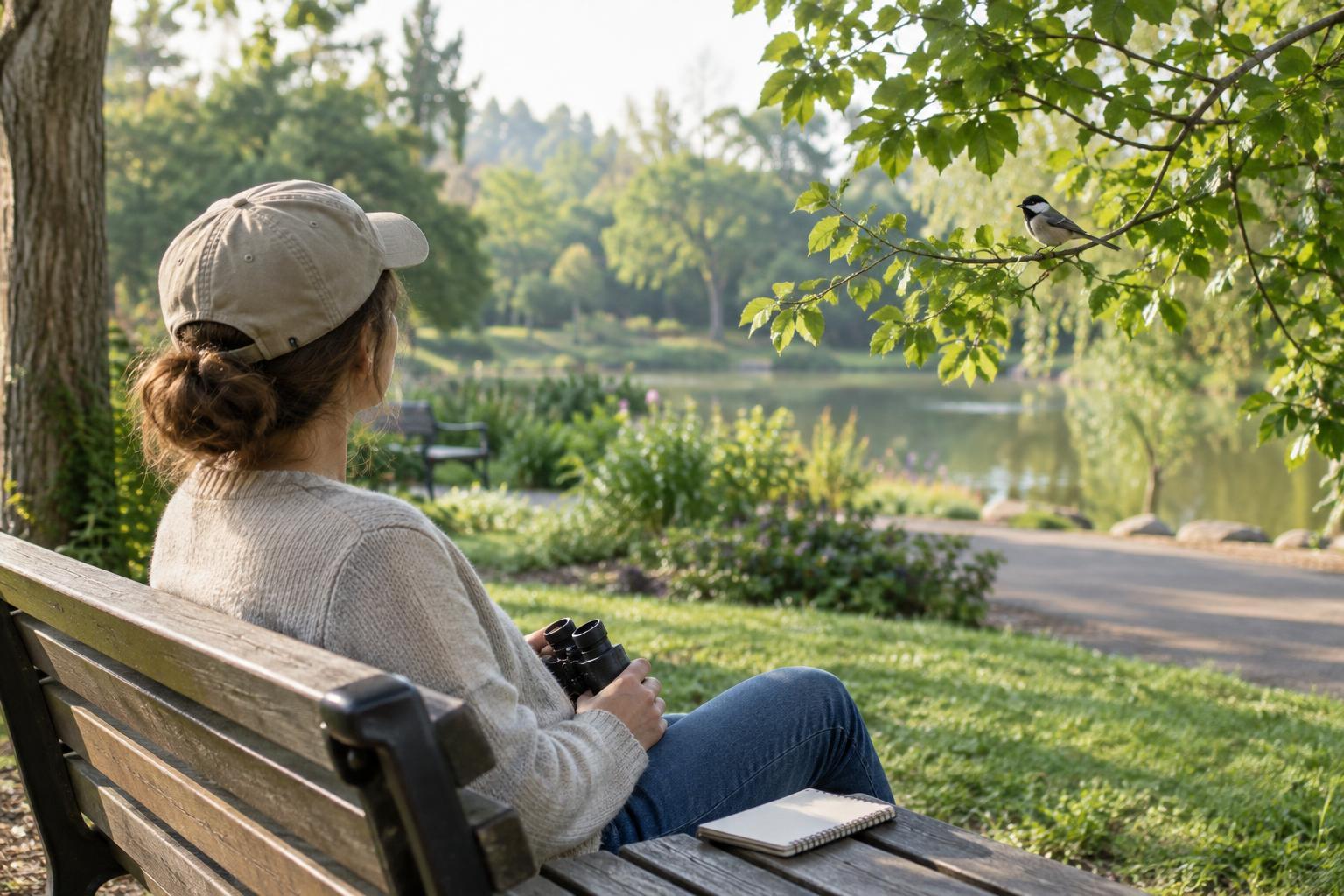
Your eyes and ears are enough for a first outing. If you have binoculars, practice focusing on a stationary object before trying to follow a moving bird. Bring a small notebook or use a phone note to record the place, general conditions, and two or three details about what you noticed. A sketch of a tail shape or a brief sound description can be more useful than a long list of uncertain names.
A field guide can help you learn the birds likely to appear in your area, but treat it as a tool rather than a test. Compare several features instead of deciding from color alone. It is fine to write “small brown bird in low shrubs” and leave it unidentified. Over time, your notes may reveal which places you enjoy visiting and which birds you are beginning to recognize. That is progress, even without a long checklist.
Make room for curiosity and respect
Birdwatching works well as a solo pause, but it can also be a shared hobby. A walk with a friend or a local beginner-friendly outing gives you someone to compare observations with. You can set a modest goal, such as learning one common bird by sight and sound, without turning every visit into a search for something new. Returning to a familiar place often gives you more time to notice small changes.
Give birds space, especially around nests or young birds, and stay on permitted paths. Do not risk a road crossing or enter private property to get a better view. Some outings will be quiet, and that is part of the hobby: you can still notice habitat, practice listening or simply enjoy being outside. The best beginner approach is the one that fits your energy, surroundings and curiosity well enough to make you want to go again.