Choose a kit you want to finish
A model kit can offer a satisfying change of pace: a small project with visible progress and no need to be good at it on day one. If you are finding new ways to spend your time after military service, it may help to choose a hobby for enjoyment rather than achievement. The first goal is not a perfect display piece. It is to learn what you like about building.
Pick a subject that interests you, whether it is an aircraft, a car, a building, or something from a story you enjoy. Then check the box for the recommended skill level, tools, paint, and glue. A kit with fewer parts and clear instructions is usually a friendlier starting point than one with intricate details. Snap-fit kits can be especially approachable because they often require less equipment.
Before buying extras, look through the instructions. Some kits look complete on the box but show painted details that are optional or require separate supplies. It is fine to build the basic model first and leave painting or weathering for a later project.
Start with a small, useful tool set
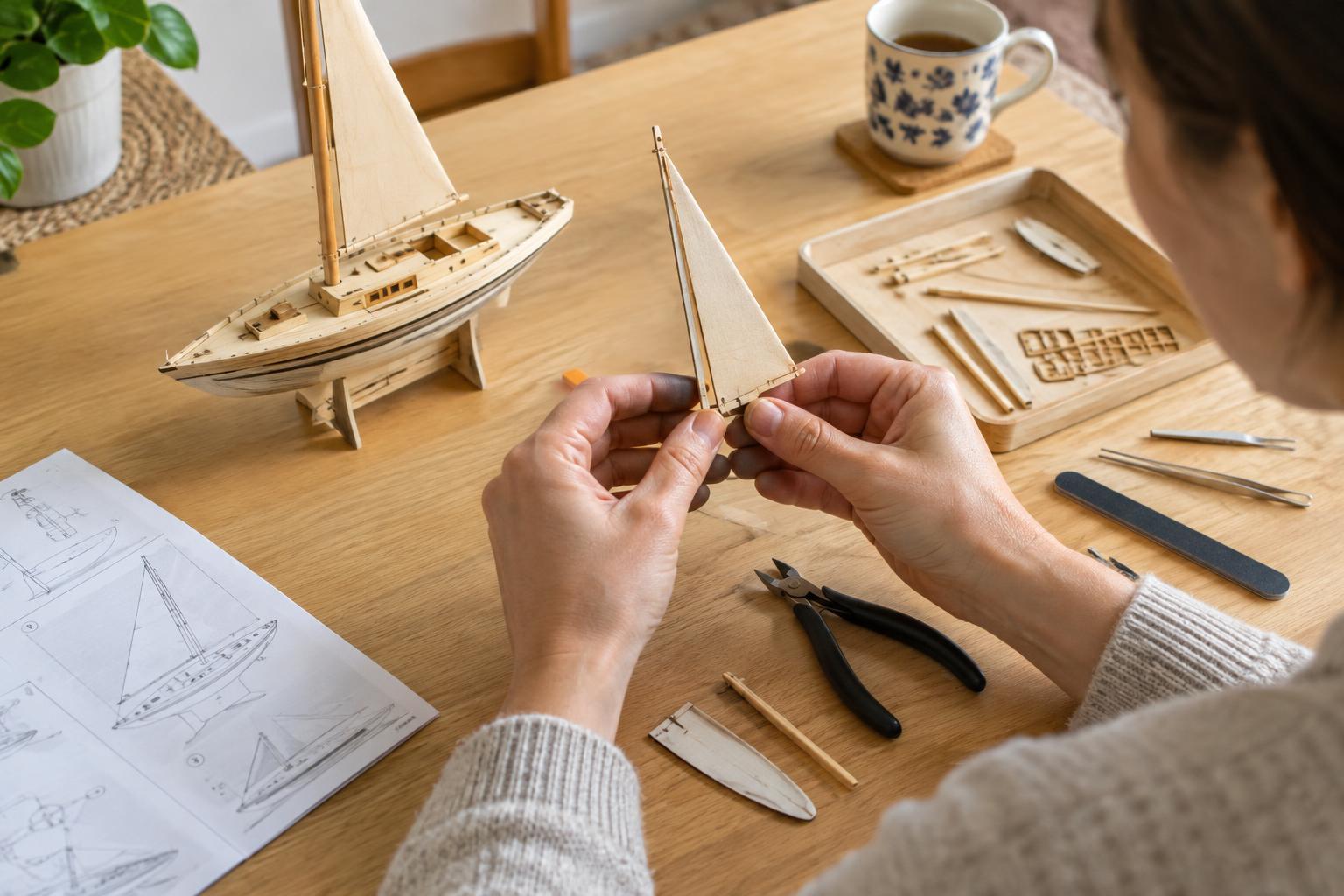
You do not need to collect every modeling tool at once. For many plastic kits, a basic starting set includes hobby cutters for removing parts from their frames, a small file or fine sanding stick for smoothing rough edges, and tweezers for handling tiny pieces. If the kit needs adhesive, choose one suited to its material and follow the product directions. Keep a pencil nearby to mark your place in the instructions.
Remove each part carefully rather than twisting it free. Cutting a little away from the part can leave room to trim the remaining nub without damaging the surface. Work on one assembly at a time, and test how pieces fit before applying glue. These habits may feel slow, but they can prevent avoidable frustration.
Sharp tools and adhesives deserve a deliberate setup. Cut away from your hands, protect the table, and use glue or paint where there is suitable ventilation. Put caps back on products between uses and keep small parts and tools out of reach of children and pets.
Make a workspace you can return to
A dedicated hobby room is unnecessary. A corner of a desk or kitchen table can work if you have enough light, a stable surface, and a way to put the project aside safely. A tray or shallow box helps contain parts and makes it easier to clear the table when you are done. A light-colored mat or sheet of paper can make small pieces easier to see.
Sort the parts only as much as the next steps require. Leaving most pieces attached to their numbered frames helps you identify them later. Put loose pieces in a small container and keep the instructions with the project. If several parts look alike, check their numbers and orientation before joining them.
Consider what will make starting easy next time. You might leave the next instruction step marked and your tools together in the tray. This modest bit of organization turns a spare half hour into building time instead of a search for a missing part.
Let patience be part of the activity
Model building involves waiting, checking, and occasionally starting a step again. Parts may not line up on the first try. Paint may need time to dry. When something resists, pause and compare it with the diagram before pressing harder. A piece may be facing the wrong direction, or a small bit of plastic may be in the way.
Short sessions can be more enjoyable than pushing to finish in one sitting. Choose a natural stopping point, such as completing a wheel assembly or preparing a few pieces for the next step. If you make a mistake, decide whether it needs fixing at all. Small imperfections are often less noticeable once the model is assembled, and they can teach you what to try differently next time.
Patience does not mean turning a hobby into another test of discipline. You can skip optional details, change your plan, or take a break. The kit is yours to build in a way that suits your time and attention.
Finish, reflect, and choose what comes next
When the model is complete, find it a place where it will not be easily knocked over. You might take a photo, not to judge the result against someone else’s work, but to remember what you made. Notice which parts you enjoyed: fitting pieces together, painting, researching the subject, or simply having a quiet project at hand.
For a second kit, change just one thing. Try a slightly different subject, add a basic paint color, or practice a technique that was difficult the first time. If you would enjoy company, a local hobby shop, library group, or community club may be a place to meet other builders. Building alone is just as valid. A good hobby is one you can return to on your own terms.