Start with the kind of music you want to make
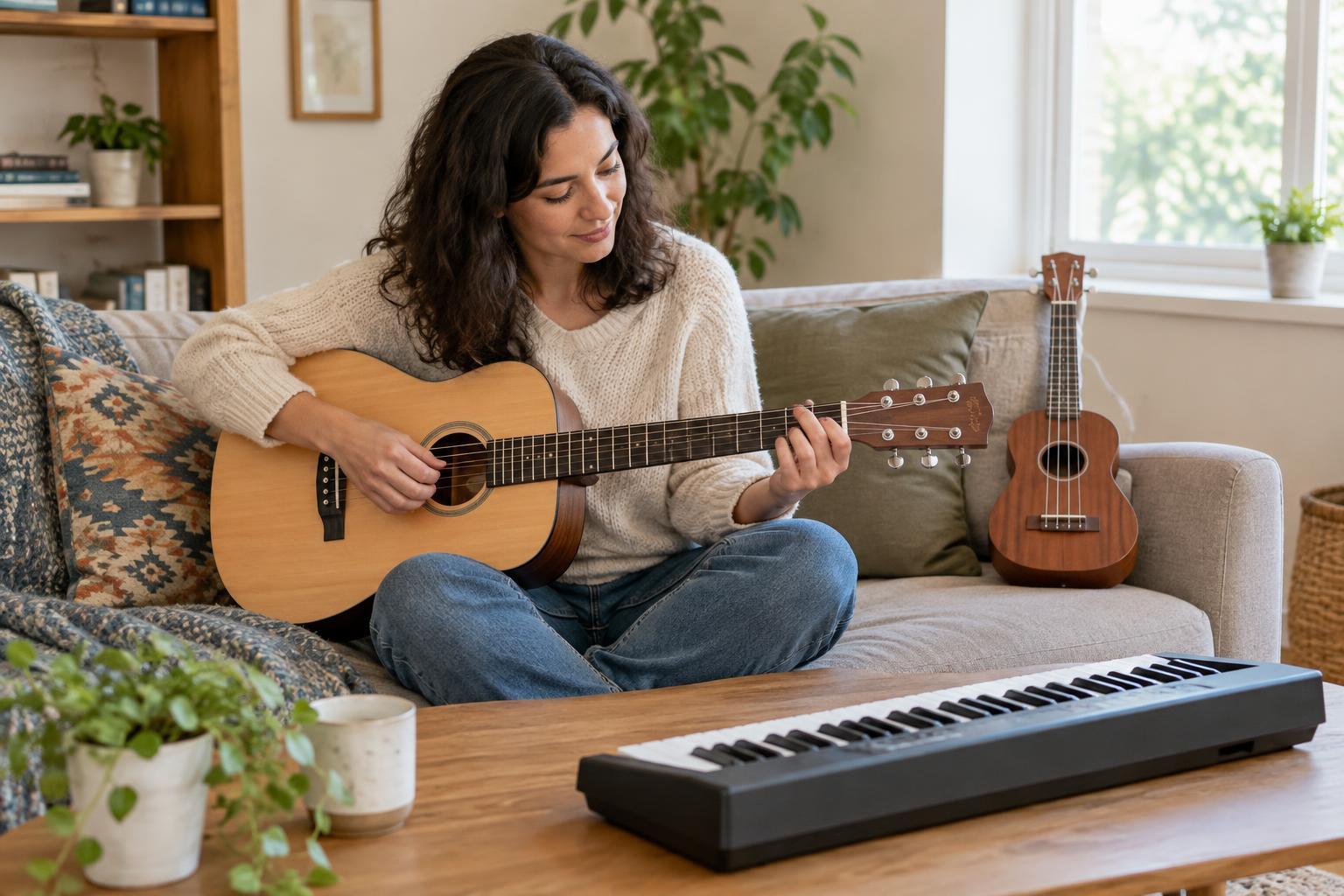
The best first instrument is not necessarily the easiest one. It is one whose sound makes you want to return to it. Think of a song you enjoy: would you rather play its melody, keep its rhythm or accompany someone singing? A keyboard may appeal if you want to explore melodies and chords. A guitar or ukulele may suit someone who wants to strum along with familiar songs. A hand drum offers a direct way to experiment with rhythm.
You can also think about where music might fit into your life. Some people want a quiet activity after a busy day; others hope to join an informal group eventually. During a transition from military service to civilian routines, a hobby can be something you choose entirely for yourself. There is no need to turn it into a goal with a deadline. Enjoyment is a sufficient reason to begin.
Match the instrument to your space and routine
Picture an ordinary practice session, not an ideal one. Where would you keep the instrument, and how easily could you begin playing? A small instrument kept within reach may get more use than one that needs to be assembled or moved out of storage. If you share a home or have close neighbors, consider volume. A digital keyboard with headphones can offer flexible practice, while an acoustic drum kit may require a dedicated space and an agreement about noise.
Physical comfort matters, too. Instruments differ in weight, playing position and the motions they ask of your hands or breath. Try holding or playing one for a few minutes if you can. Notice whether the size feels manageable and whether you can sit or stand comfortably. Beginners often feel awkward at first, but persistent discomfort is a reason to look at a different size, setup or instrument.
Try before making a large commitment
If possible, borrow, rent or try an instrument before buying one. A music shop, library lending program or someone you know may offer a chance to handle a few options. Ask a simple question while you try each one: can I imagine enjoying the sound and the process of making it? You do not need to produce a tune on the first attempt. The point is to learn whether the instrument invites curiosity.
When comparing costs, look beyond the instrument itself. Depending on your choice, you may need a case, stand, tuner, replacement strings or other supplies. Used instruments can make exploration more affordable, but check that they work as expected. If you are unsure what to inspect, ask a knowledgeable player or shop staff member to help. Starting with a modest, playable option can leave room to change direction later.
Choose a way to learn that keeps you engaged
Different learning formats suit different people. A teacher can give feedback and help you work through a specific difficulty. A beginner book or recorded lesson lets you move at your own pace. A casual class or group can add company to the experience. None is required for every learner; you can combine approaches or switch if one stops being useful.
Keep early practice small enough to repeat. You might spend ten minutes finding a comfortable hand position, playing a simple rhythm or learning a few notes. Then play something just because you like how it sounds. It can help to leave the instrument ready to use and keep a short list of things you want to try next. Progress may be uneven, so let curiosity guide your sessions rather than judging each one as a test.
Let your first choice be a beginning, not a verdict
After several weeks, ask what you enjoy: the sound, the feel of playing, the songs available to you or the time spent learning. If one part frustrates you, a small adjustment may help. A different lesson, a more comfortable setup or a simpler song can change the experience. If the instrument still does not appeal, trying another is not a failure. You have learned more about the kind of music-making you want.
You can keep music entirely personal or share it when you feel ready. Playing with a friend, attending a beginner-friendly gathering or learning a song for someone you care about can give the hobby a social side. Whether your aim is a quiet half hour at home or a place in a group, choose the instrument that makes the next practice session feel worth starting.