Trying to replace one schedule with another
A change in household rhythm can be one of the less obvious parts of life after service. There may be no shared start time, predictable handoff or established system for everyday tasks. It is tempting to respond by planning every hour. But a household routine has to accommodate other people’s schedules, variable errands and days that do not go to plan.
Instead of designing an ideal day from morning to night, begin with a few anchors: a regular time to look at the calendar, a point when dishes are dealt with and a short reset before bed. Leave space between commitments where possible. A routine is more useful when it tells you what matters next than when it tries to account for every minute.
Making a plan before noticing what actually happens
A routine built from assumptions can miss the work your household already does. You might set aside Saturday for groceries, then discover that it is the busiest day for everyone involved. Or you may schedule a long evening tidy-up when people have little energy left. Neither result means you lack discipline; the plan simply needs better information.
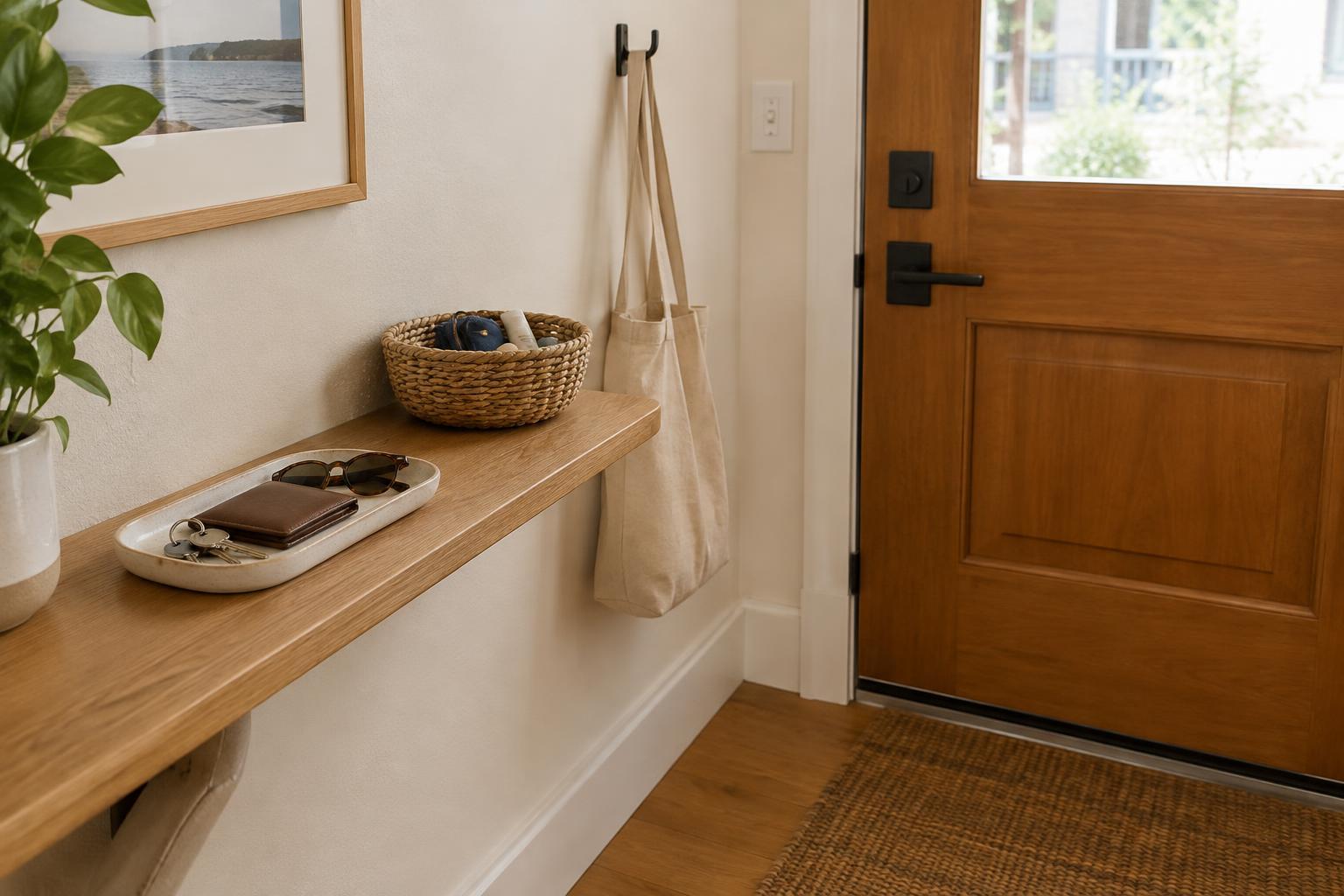
For a week, make brief notes about recurring tasks and friction points. When does laundry pile up? Which items are hard to find when you leave the house? What gets postponed repeatedly? Keep the observations neutral. Then adjust one part of the day at a time, such as preparing bags by the door or choosing a grocery window that fits your household. Small tests are easier to revise than a complete overhaul.
Keeping responsibilities in one person’s head
Another common mistake is treating household organization as a private memory task. If only one person knows when supplies are running low, which appointments are coming up or what “clean the kitchen” includes, it is hard for anyone else to help without asking for directions. This can create frustration even when everyone intends to contribute.
Make recurring work visible in a way people will actually use. A shared calendar, a note on the refrigerator or a simple list of weekly tasks may be enough. Be specific: “take out trash on collection night” is clearer than “handle trash.” If you share a home, agree on who owns each task and what to do when that person is unavailable. The goal is not to monitor each other; it is to reduce guesswork.
Treating missed days as a failed routine
A plan that only works during an ordinary week is likely to break during travel, illness, changing work hours or family demands. One missed chore can then feel like proof that the whole system has failed. That all-or-nothing response often makes it harder to start again.
Build a lighter version of the routine for disrupted days. Identify what must happen to keep the household functional, such as clearing a usable food-preparation space, checking tomorrow’s commitments and putting essential items where they can be found. Other tasks can wait. A brief weekly review can help you move unfinished work rather than carry it as a vague obligation. Flexibility is part of a dependable system, not an exception to it.
Forgetting that the routine should support your life
Household systems can become so focused on efficiency that they leave little room for rest, hobbies or time with other people. A perfectly ordered checklist is not necessarily a good routine if it is difficult to live with. As civilian commitments change, what worked at first may also stop fitting.
Ask a practical question every few weeks: Is this routine making ordinary days easier? If not, find the task, time or expectation that causes the most friction. You might shorten a daily clean-up, move an errand or divide a larger job into two steps. Keep what helps and change what does not. Building a household routine after service is not a test of how closely you can follow a plan; it is an ongoing way to make home work for the people in it.