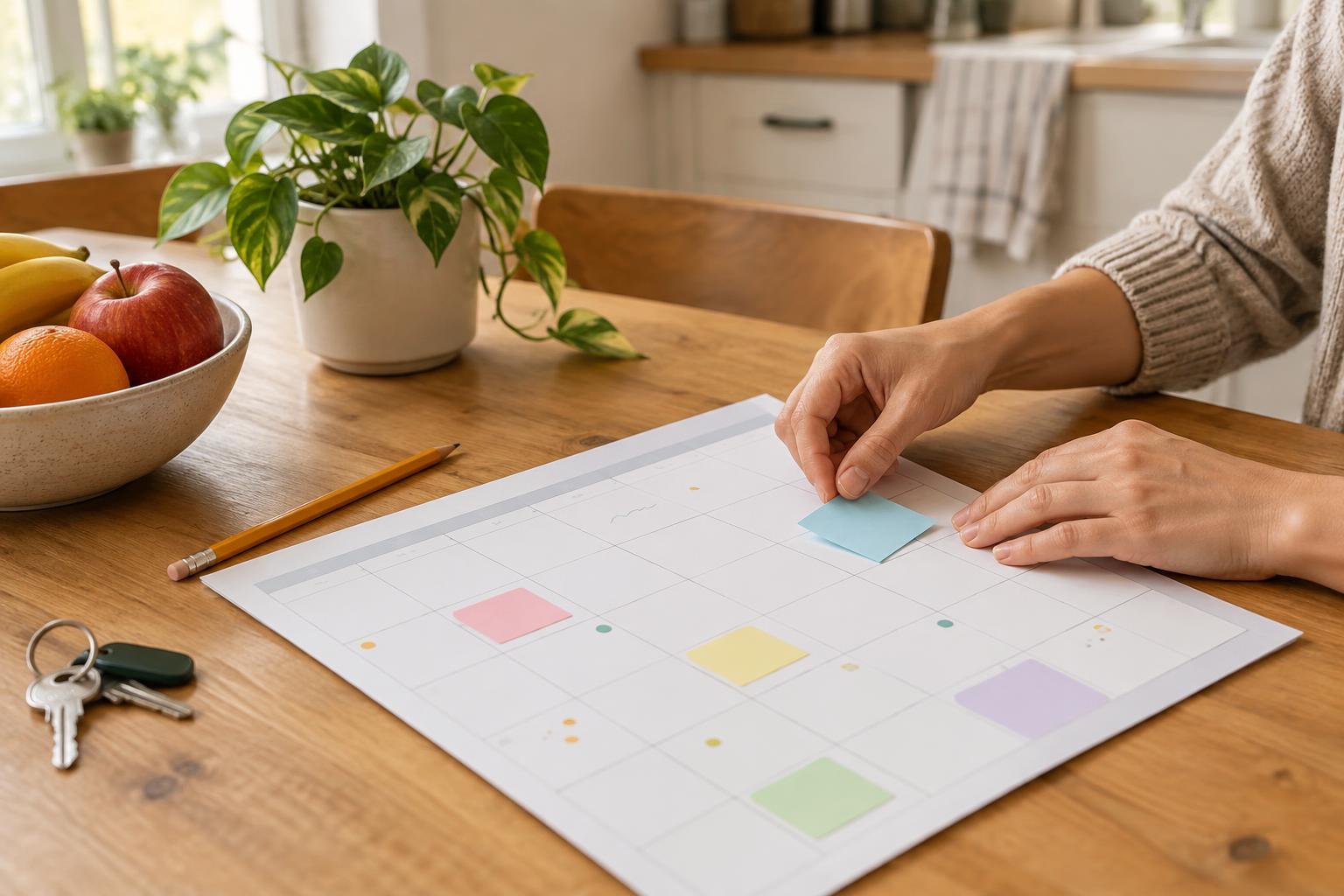
Start with a calendar you will actually check
A calendar works best when it fits the way your household already operates. A paper calendar on the kitchen wall may be easier to notice than an app. A phone calendar may be more useful if plans often change while you are away from home. Some households use both: a shared digital calendar for updates and a paper copy for the week ahead. The goal is not to build a perfect system. It is to create one dependable place to look before making a plan.
Choose who needs access and what belongs on the calendar. If several people share a home, agree on whether it will hold everyone’s appointments or only plans that affect the household. For example, a private meeting might stay on an individual calendar, while a time when the car is unavailable belongs on the shared one. During a transition from military service to civilian routines, schedules may feel less standardized than they once did. A modest, visible system can help without trying to account for every hour.
Separate fixed appointments from flexible tasks
Enter commitments with set times first: appointments, classes, school events, work shifts, repair visits or plans with other people. Include the location or joining instructions if you are likely to need them. If travel or preparation takes time, add a separate reminder for when to leave or get ready. This keeps the calendar from showing only the appointment time while hiding the effort needed to arrive.
Next, add tasks that repeat but do not require an exact hour, such as taking out the bins, checking the mail, watering plants or changing bedding. Place these on a suitable day rather than filling the calendar with narrow time slots. If a task can move without causing a problem, label it as flexible. That small distinction makes it easier to adjust when an appointment runs long or an ordinary day becomes unexpectedly busy.
Make recurring entries useful, not noisy
Recurring entries can spare you from rebuilding the same list each week or month. Set up only the repetitions you genuinely want to see. Weekly household tasks, monthly checks of supplies and periodic maintenance reminders are possible starting points. Use short, specific names: “Put bins out” is easier to act on than “Household upkeep.” For an occasional task, a reminder to decide whether it is needed may be more useful than an automatic instruction to do it.
Too many alerts can make a calendar easy to ignore. Reserve notifications for commitments that require action at a particular time, and consider leaving flexible chores visible without an alarm. If an entry is repeatedly dismissed, ask whether its timing is wrong, whether it belongs on a separate task list, or whether it is still necessary. The calendar should help you notice priorities, not become another stream of interruptions.
Build in room for shared responsibilities
When more than one person uses the calendar, write entries so anyone involved can understand them. “Car service — drop-off at 9” communicates more than “car.” If someone is responsible for a task, add their name or initials, but avoid assuming that putting a task on the calendar automatically assigns it. A brief conversation about who will do what can prevent a shared reminder from becoming a shared misunderstanding.
It can also help to mark activities that affect household logistics even when they are not chores. An evening class, a volunteer commitment or time set aside for a hobby may affect meals, transport or quiet time at home. Including those plans gives everyone a fuller view of the week. A household calendar is not just a list of obligations; it can make room for learning, recreation and time with others.
Review the week and keep adjusting
Pick a consistent moment for a short weekly review, such as Sunday evening or the day before your workweek begins. Look for appointments that need preparation, overlapping plans and tasks that could be grouped into one trip. Check whether any recurring entry needs to move. If you use paper and digital calendars together, compare them during this review so they do not quietly become two different versions of the week.
Start small enough that you can maintain the system. You might begin with appointments and two recurring tasks, then add more only when there is a clear benefit. If a week goes by without an update, there is no need to reconstruct every missed detail. Add the next known commitment and continue. A useful household calendar is one you can return to easily, even after plans change.