Start with the kind of ride you want
Cycling can be a simple way to spend time outdoors, explore a neighborhood or add an enjoyable activity to a weekly routine. If you are adjusting to life after military service, it can also offer a low-pressure way to discover local places at your own pace. There is no need to make every ride a workout. A short trip to a park or café counts as recreational cycling.
Before choosing equipment or a route, picture the rides you would actually like to take. Paved paths, quiet streets and unpaved trails can call for different tires and riding habits. If you already own a bike, start with routes that suit it rather than assuming you need a new one. If you are borrowing or buying, a bike shop or experienced rider may be able to help you check whether its size and riding position feel comfortable.
Choose a few useful essentials
A bike does not need to be elaborate, but it should be in working order. Before a ride, check that the tires are inflated to the range marked on their sidewalls, the brakes respond and the chain moves smoothly. If something feels loose or unfamiliar, ask a bike mechanic to look at it. Learning these basic checks can make spontaneous rides easier to plan.
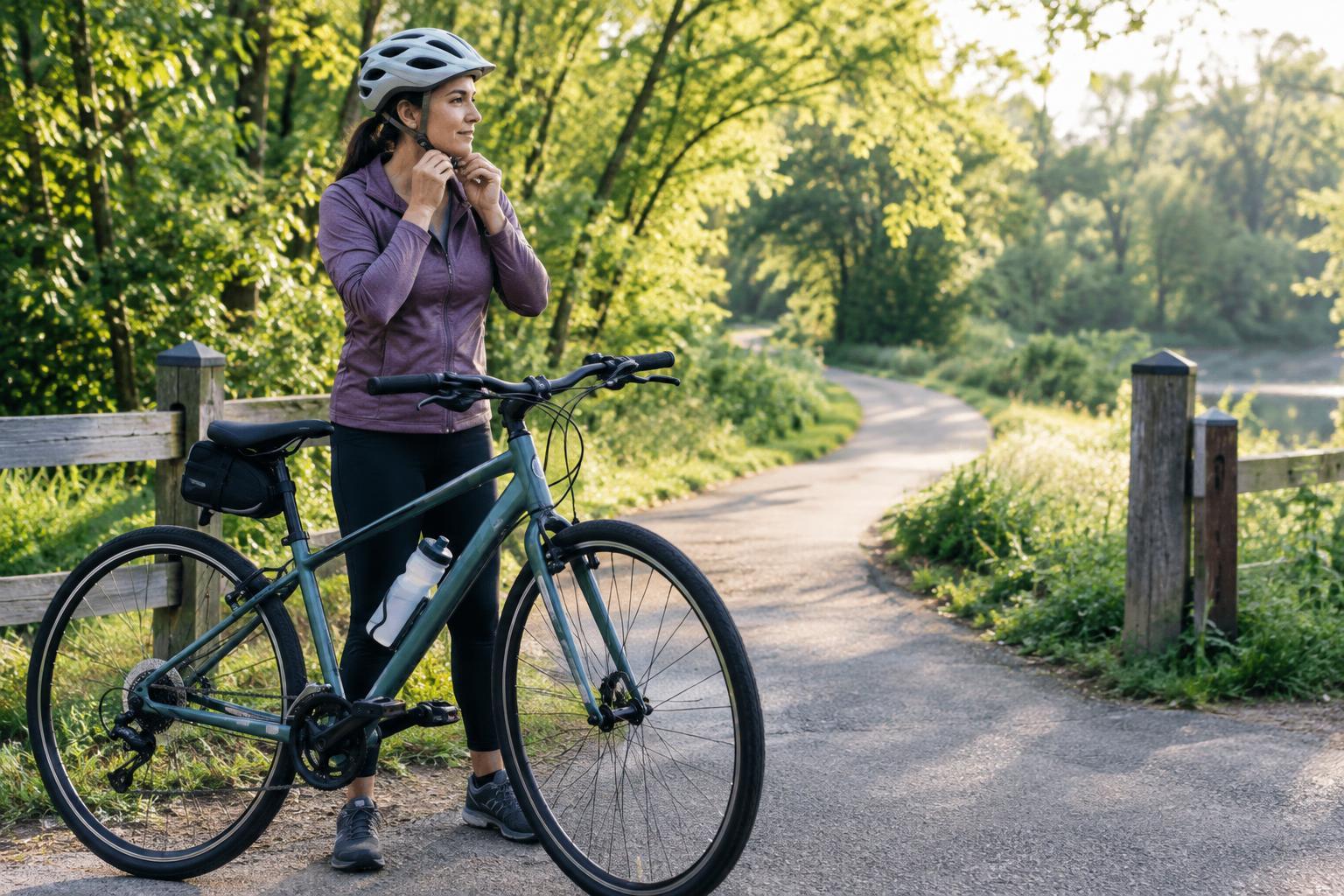
A properly fitted helmet is a sensible starting point. Lights and reflectors help other road users see you, including when daylight is fading. Bring water, a way to carry a phone and any items you might want on a longer outing. A small repair kit with a spare tube or patch kit and a pump is useful once you know how to use it; for early rides, choosing a route close to home or a transit option can be a practical backup. Check local rules for required equipment and where riding is permitted.
Plan a route you can adjust
For a first outing, choose a manageable loop or an out-and-back route with a clear turnaround point. Look for paths or streets where you expect to feel comfortable, and note crossings, hills and places to pause. A short route you enjoy is more valuable than a long route that leaves you reluctant to ride again. If you are unsure how far to go, choose a distance that gives you the option to turn back early.
Maps can help identify bike paths, but a marked route is not a guarantee of easy riding. Surface conditions, traffic and path access can vary. Review the route before leaving, then stay willing to change it when you get there. Let someone know your general plan if you are heading somewhere unfamiliar, and consider carrying directions you can use without stopping in an awkward spot.
Keep the first rides comfortable
Give yourself time to get used to starting, stopping, shifting gears and signaling before mixing with busy traffic. An open, permitted area or quiet path can provide space to practice. Ride at a pace that lets you pay attention to your surroundings, leave room when passing others and slow down where visibility is limited. On shared paths, a polite verbal warning before passing can make the experience better for everyone.
Comfort is worth noticing. If your hands, seat or shoulders feel strained, you may be gripping too tightly, staying in one position too long or riding a bike that needs adjustment. Take breaks and change your plans when conditions do not feel right. You do not have to push through discomfort to make a ride worthwhile.
Build a hobby that fits your routine
After a few rides, think about what made you want to go out again. You might enjoy familiar solo loops, exploring new paths with a friend or joining a casual group ride. Local community boards, bike shops and recreation programs may offer opportunities to ride with others; ask about distance, pace and route surface before joining so you can choose a comfortable fit.
Keep planning simple: pick a route, check the bike, bring the essentials and leave room for a change of plans. As you learn what you enjoy, you can add skills or gear for the rides you actually take. Recreational cycling works best as a hobby when it fits your time, budget and interests—not someone else’s idea of how far or fast you should go.