Choose a place and set a modest goal
A cleanup works best when everyone can picture what they are gathering to do. Rather than promising to tidy an entire neighborhood, choose a short stretch of sidewalk, a shared green space or another clearly defined area. Walk through it beforehand, if possible, and note where litter collects, where volunteers could meet and whether there are hazards that call for a different plan.
Think about who looks after the space. A sidewalk, park or shared courtyard may have different rules for volunteer activity and waste collection. Check with the relevant property manager, neighborhood group or local public works contact before setting a date, especially if you hope to leave filled bags for pickup. Keep the goal within what your group can finish and dispose of responsibly. A small area completed well is more useful than a large area left with bags no one can collect.
Invite neighbors without making participation complicated
Send a short invitation that names the location, meeting point, start and end times, and expected tasks. Let people know whether supplies will be available and what they should bring, such as water, sturdy closed-toe shoes or work gloves. A clear invitation makes it easier for someone to join for an hour without wondering what they have signed up for.
Offer more than one way to help. Some residents may prefer collecting litter, while others can hand out bags, keep track of supplies, welcome new arrivals or help coordinate disposal. Someone who cannot attend might still share the invitation or lend a litter picker. Make it clear that people can leave when they need to and that no one is expected to explain why a particular task does not suit them.
For someone building new civilian routines after military service, a cleanup can be a straightforward way to meet neighbors around a shared task. It does not need to carry a larger purpose for every participant. Treat it as a chance to work alongside people, learn the names of a few nearby residents and contribute to a place you use together.
Prepare supplies and a simple safety plan
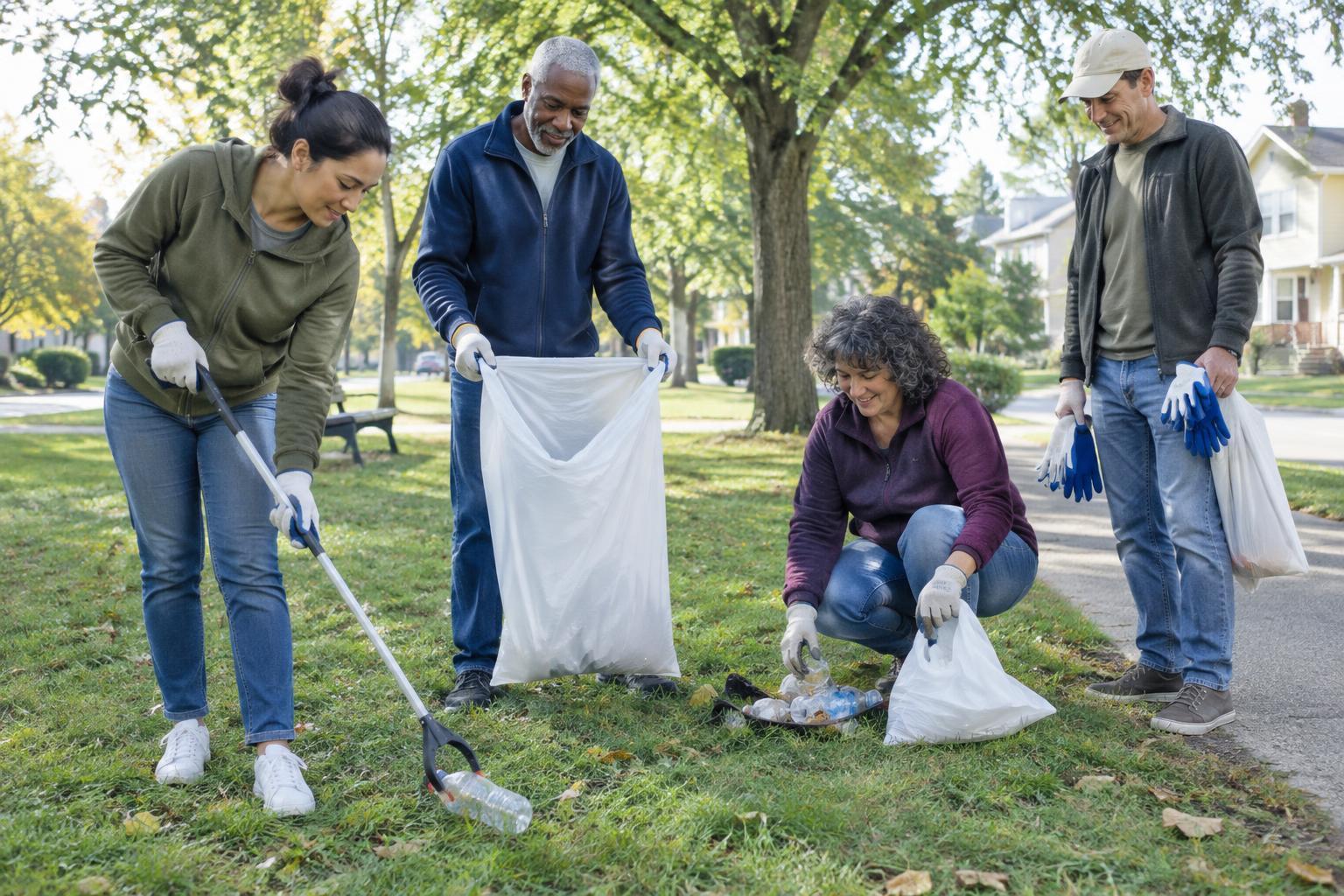
Before the event, decide who will bring bags, gloves, litter pickers if available, and a way to carry supplies. Plan for filled bags as carefully as empty ones: identify a permitted collection point and confirm how the waste will be removed. If the area has recycling options, ask what materials they accept rather than assuming that anything picked up outdoors belongs in a recycling bin.
At the meeting point, give a brief orientation. Identify the cleanup boundary, the finish time and a place to bring filled bags. Ask volunteers to stay out of roads and away from steep banks, unstable ground or other risky areas. Make clear that no one should touch needles, unknown substances, broken glass they cannot handle safely, or items that are too heavy or awkward to lift. Mark the location from a safe distance and follow the appropriate local reporting process instead.
Check the weather before heading out and be willing to postpone if conditions make the work unsafe. Encourage breaks and leave room for people to choose lighter tasks. A small group does not need an elaborate command structure, but everyone should know whom to tell if they spot a hazard or decide to leave early.
Keep the work organized on the day
Begin on time, even if the group is small. Introduce people, restate the boundaries and divide the area into manageable portions so volunteers do not all crowd the same spot. Pairs can make it easier to notice when a bag is full or when someone needs a hand, but let people work in a way that feels comfortable and safe.
Keep track of where full bags go so they do not block a path or become someone else’s problem. If you encounter a bulky object or an area that would require specialist equipment, leave it in place and note it for the responsible property owner or service. Finishing within the agreed time helps volunteers trust that future invitations will respect their schedules.
Close the loop before planning another cleanup
At the end, gather supplies, check that no bags have been forgotten and confirm the disposal arrangement is working as planned. Thank people for the time they gave, whether they stayed for the whole event or only part of it. A brief follow-up can share what the group completed and mention any hazards reported, without turning the day into a competition over how much trash was collected.
Ask one simple question: what would make the next cleanup easier? Residents may suggest a better meeting point, a shorter route or a different time. Use that feedback only if the group wants to meet again. A successful first cleanup can be a single, well-finished effort; it does not have to become a standing commitment.