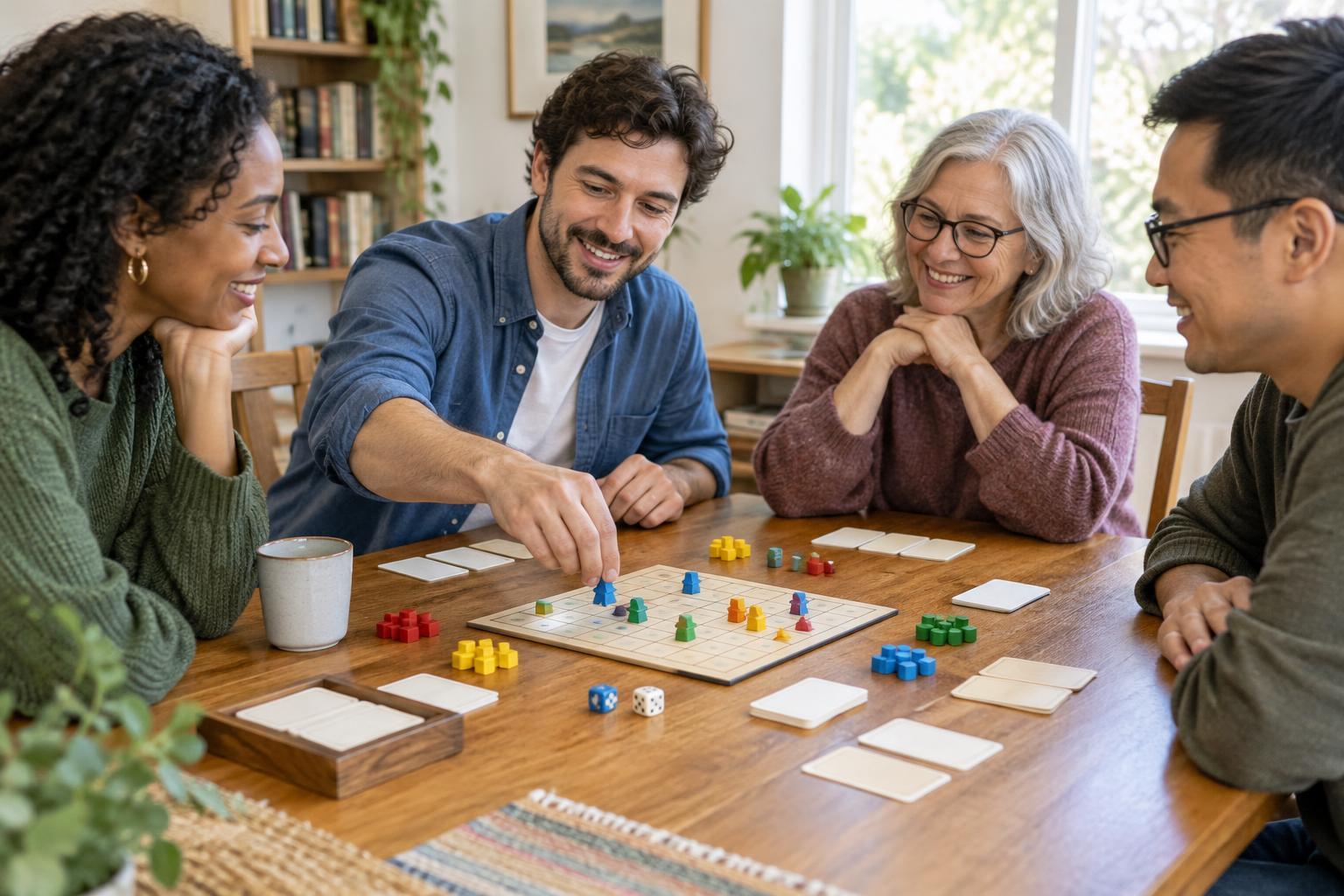
Choose a game that fits the group
A board game night can be a low-pressure way to spend time with friends, family or a local group. For someone building new routines after military service, it can also offer a shared activity that does not depend on talking about work or past experiences. The goal of a first session is not to master every strategy. It is to find a game people are willing to try together.
Before picking a box, check the player count, expected play time and amount of reading involved. Ask whether the group would prefer a cooperative game, where players work toward a shared goal, or a competitive one. A shorter game is often easier for a first meeting because there is time to reset or try something else. If you are joining an established group, it is fine to say that you are new and ask what they recommend.
Make setup part of learning
Open the rulebook before everyone arrives if you can. Look for the objective, the order of play and the conditions that end the game. Then sort the pieces into a few clear piles: items each player needs, shared supplies and pieces used only at particular times. You do not need to memorize every exception. Knowing where to find an answer is more useful than trying to deliver a perfect explanation from memory.
At the table, give each player enough space for cards or pieces and put shared items within easy reach. Check whether anyone would benefit from brighter light, larger text or a seat with a clearer view of the board. If the game has hidden information, explain what must stay private before pieces are dealt. Let people handle the components while you describe them; seeing how a piece is used can make an unfamiliar rule easier to follow.
Teach the goal before the details
Start with one sentence about what players are trying to accomplish. Next, explain what happens on a typical turn and how the game ends. Only then introduce the choices and special rules players will meet early on. This order gives everyone a reason to care about each rule. If a rule matters much later, point out where it appears in the rulebook rather than stopping the introduction for a long explanation.
A sample turn can help. Walk through one possible move with pieces on the table, then return them to their starting positions. Invite questions and give people a moment to look at their options. When someone asks something you cannot answer, check the rules together. If the group agrees to make a temporary ruling so play can continue, say what that ruling is and apply it consistently for the rest of the game.
Keep the first game welcoming
Agree at the start that this is a learning game. Players may want reminders, and a quick restart after an early misunderstanding may be more fun than pressing on. Give advice when it is requested, but avoid directing another person's turn. It is easy to see a move you would make; discovering a different approach is part of their experience. In a cooperative game, make room for each player to choose rather than letting one confident voice make every decision.
Respect the pace of the table. Put away distractions when it is your turn, but allow reasonable thinking time and breaks. If a player makes a mistake, explain the relevant rule without making them feel foolish. The group can decide whether to undo an action, especially if no new information has been revealed. Treat wins and losses lightly: thank others for playing, and avoid replaying someone's poor move as the explanation for the result.
End with a plan, not a verdict
After the game, ask what people enjoyed and what remained confusing. Some games become more satisfying on a second play, once the basic turn feels familiar; others simply will not suit the group. Either outcome is useful. Return the components to the box in an orderly way so the next setup is easier, and note any rule you want to check before playing again.
You do not need a large collection or a regular club to make board games a hobby. Borrowing a game, visiting a casual game night or replaying one familiar title can be enough. A good first-game habit is to leave people feeling that they can ask questions, make choices and come back if they want to. The rules provide the structure; the people at the table make it an invitation.