Start with the kind of day you want
A first hike can be a simple way to spend time outdoors and try a new routine. It does not have to test your endurance. Before looking at trails, decide how much time you want to spend walking, whether you would enjoy company and what would make the outing worthwhile. A view, a quiet stretch of woods or a picnic spot can be a better goal than covering a particular distance.
If you are getting used to civilian routines after service, it may be tempting to treat the hike like a task with a target to meet. Give yourself permission to make it recreational instead. Choose a route you expect to finish comfortably, with enough time left to stop, look around and change plans if needed.
Choose a trail you can understand before you go
For a first outing, look for a well-marked route with a clear starting point and a straightforward way back. A loop can be appealing, while an out-and-back trail makes it easy to turn around whenever you choose. Distance is only one part of the decision: hills, uneven ground, exposed sections and frequent crossings can make a short route feel harder than expected. Trail descriptions may use terms such as “easy” differently, so check the route details rather than relying on the label alone.
Think through the practical details, too. Where can you park or arrive by transit? Are there restrooms, fees, opening hours or restrictions on dogs? If you are walking with someone else, choose for the group rather than the most experienced person. A nearby park path is a perfectly good first hike, especially if it lets you learn what pace and terrain you enjoy.
Check conditions and make a simple plan
Before leaving, check the weather forecast and any available information from the place that manages the trail. Rain can make surfaces slippery, heat can make an exposed route uncomfortable, and a recent closure can change access. Notice how much daylight you will have and plan to return well before dark. If conditions look unsuitable, pick a shorter route or another day; changing plans is part of planning well.
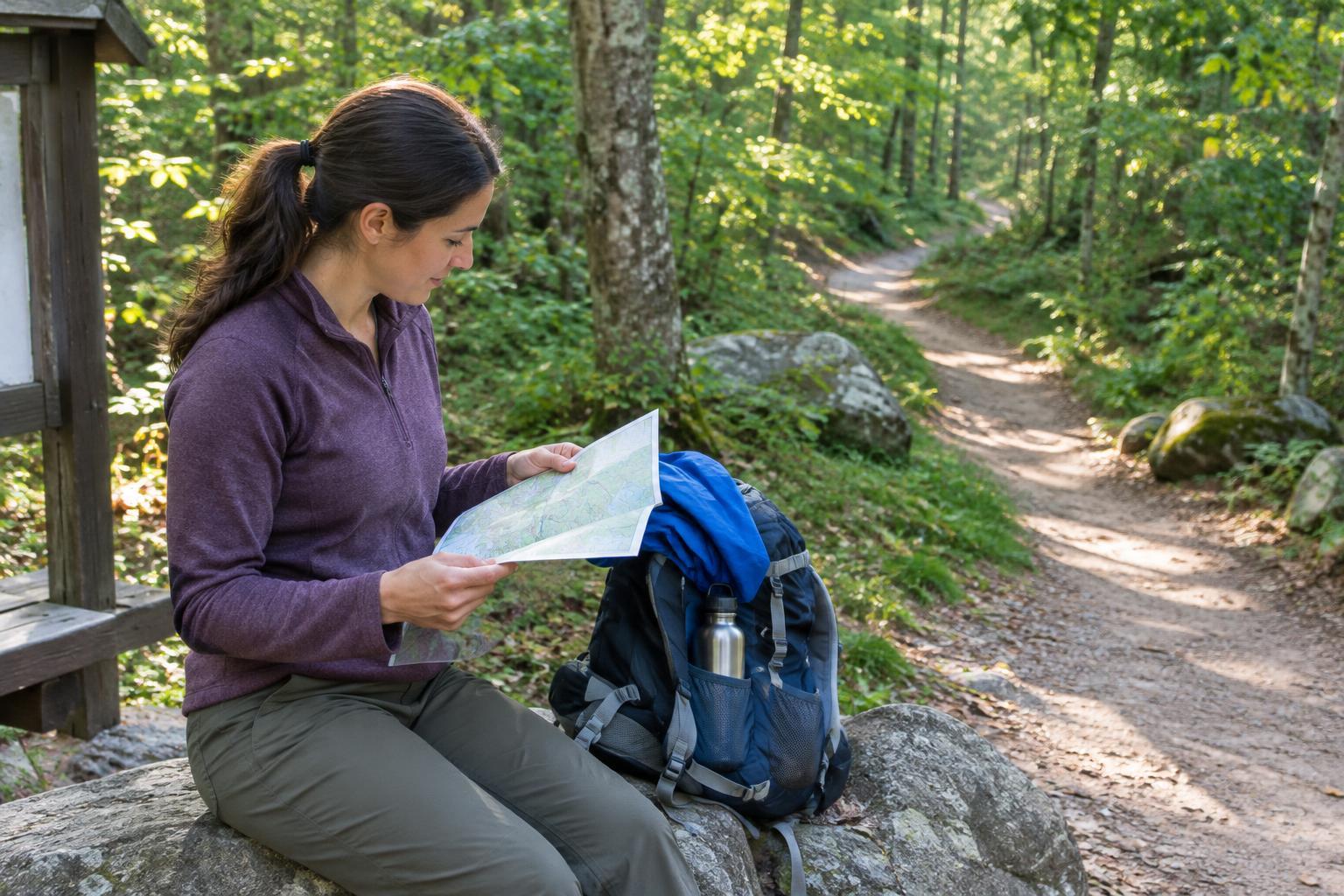
Save or carry a map that you can use without a mobile signal, and identify the trailhead, main turns and return route. Let someone know where you intend to walk and when you expect to be back, particularly if you are going alone. You do not need a complicated itinerary—just enough information to stay oriented and make a sensible decision if the day unfolds differently than expected.
Pack for comfort, not for a heavy load
Wear shoes that feel secure on the terrain you expect, along with comfortable clothing suited to the forecast. Layers can help when a cool start turns into a warmer afternoon. Bring water, a snack, sun protection and any personal items you routinely need. A small daypack can hold a rain layer, a charged phone, your map and a basic first-aid kit without making a short walk feel like an expedition.
Pack with the particular trail in mind. An easy paved path near facilities calls for a different approach from a remote, rocky route. Even so, do not rely on finding water, phone service or a shop along the way unless you have confirmed they are available. Keep your bag light enough that carrying it does not become the main event.
Set a relaxed pace and finish well
Begin at a pace that lets you talk comfortably, and take breaks before you feel worn out. At junctions, pause to confirm your route rather than following the person ahead without checking. If you are walking with a group, agree that anyone can suggest a rest or turnaround. Reaching the end of the trail is optional; returning with enough energy to enjoy the rest of your day is a good result.
Stay on the established path where possible, give other trail users room and carry out what you bring in. When you get home, make a quick note of what worked: the distance, the terrain, the shoes and the items you used. That small review can make choosing your next hike easier. The best first day hike is not the most ambitious one—it is one that makes you want to go again.