Start with the week, not the recipes
Meal planning is easier when it begins with your calendar. Look at the next several days and mark the evenings when you will have time to cook, the ones when you will get home late, and any meals you expect to eat elsewhere. You are not trying to account for every bite. You are deciding which parts of the week need a plan.
This can be especially helpful when civilian routines are still taking shape after military service. Work hours, classes, errands, and time with family or friends may not fit a familiar pattern. Give each day a realistic amount of effort: a meal you cook, one you assemble quickly, or leftovers. If Thursday is crowded, do not assign Thursday the most involved recipe.
Choose a few flexible meals
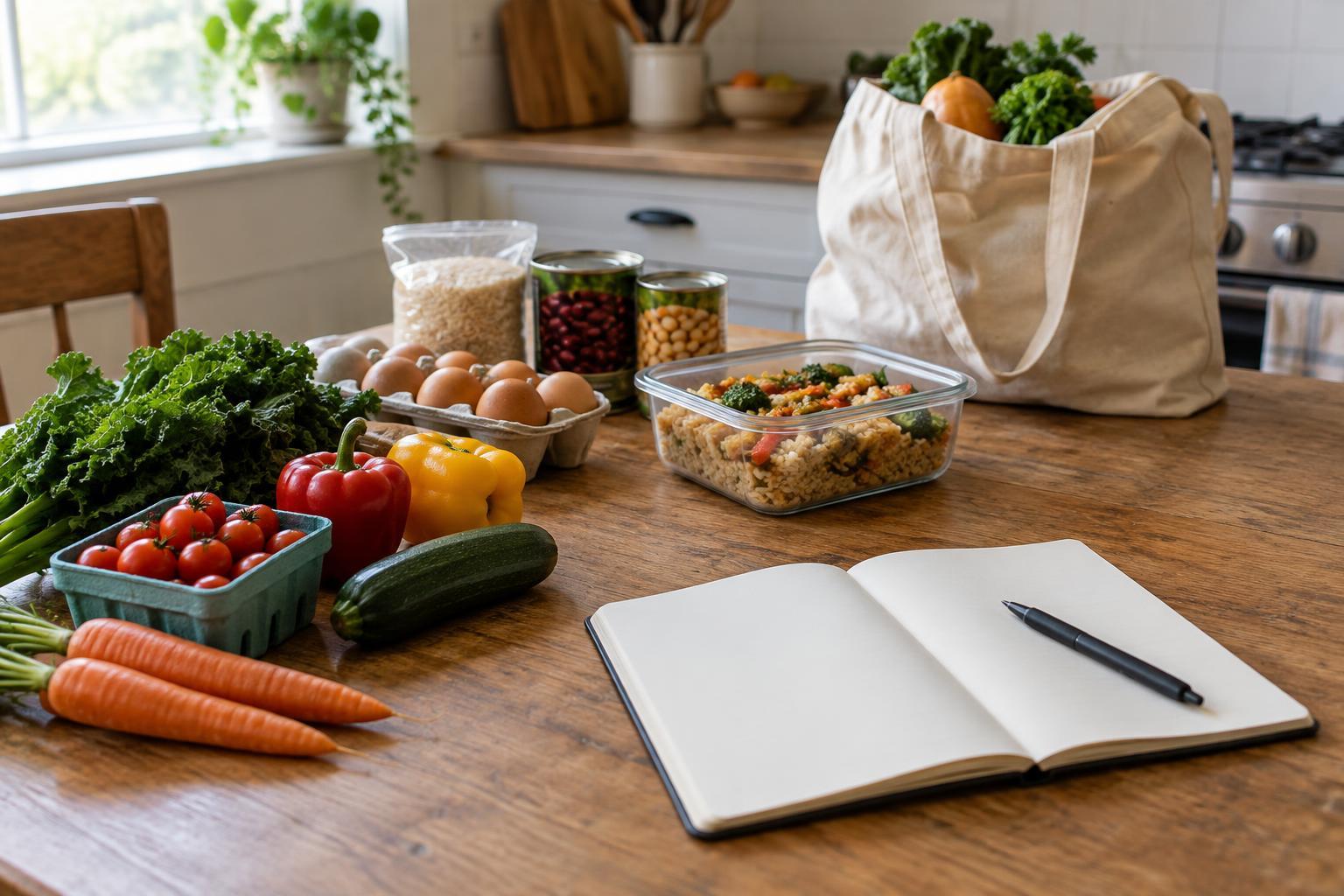
Pick two or three main meals for the week rather than a different dish for every night. A pot of rice or pasta can go with vegetables and a protein you like. Eggs, beans, or a prepared filling can become a wrap, bowl, or simple plate. A soup or stew can cover one dinner and another lunch. These are starting points, not rules; choose foods that suit your household, preferences, and available equipment.
Look for overlap before you make a shopping list. If you are buying carrots for one meal, could you use the rest in soup or as a side? If a sauce works with both a bowl and a wrap, you may not need two separate sets of ingredients. A little repetition makes planning simpler without requiring identical meals. You can change how a familiar combination is served while using what you already have.
Leave at least one meal open for leftovers, an invitation, or a change of plans. A plan that has no spare space can turn a small disruption into wasted food or an extra errand.
Shop from a short, usable list
Before shopping, check the refrigerator, freezer, and pantry. Note what needs to be used soon, then build meals around some of it. Write your list by category, such as produce, proteins, grains, and pantry items. Include basics you have run out of, but avoid adding ingredients for meals you are unlikely to make this week.
It helps to distinguish between a recipe ingredient and a flexible ingredient. A particular herb may be important to one dish, while frozen vegetables can work in several. When time or storage space is limited, flexible ingredients often make the week easier. Consider buying an amount you can reasonably use, and check package storage directions for anything unfamiliar.
Keep one low-effort backup meal on hand if you can. It might be a pantry meal, something in the freezer, or ingredients for a quick sandwich. The backup is not evidence that planning failed. It is part of the plan for a day that runs longer than expected.
Prepare only what will save you time
Meal prep does not have to mean cooking everything in advance. Think about the task that usually gets in your way. If chopping vegetables makes dinner feel like too much work, wash or cut some ahead. If deciding what to eat is the obstacle, write a short meal list where you will see it. If lunch is easy to forget, set aside a portion when you put dinner away.
A brief preparation session might include cooking one base, washing produce, and checking that you have containers for leftovers. Stop when the work you have done will make the next few meals easier. Label stored food when that helps you remember what it is, follow storage instructions, and use your judgment if something no longer seems suitable to eat.
Adjust the plan as you go
Treat your meal plan as a guide, not a schedule you must defend. If you are too tired to cook on Tuesday, swap in the quick meal and move Tuesday’s ingredients to a day with more time. If you have more leftovers than expected, use them before making something new. A quick check halfway through the week can prevent forgotten food from sitting at the back of the refrigerator.
At the end of the week, notice what was genuinely useful. Maybe two planned dinners were enough, or perhaps preparing lunches mattered more than planning evenings. Keep the parts that helped and drop the parts that added work. A basic meal system succeeds when it makes ordinary days a little easier, even when the week does not go exactly as expected.