Start with the items you actually carry
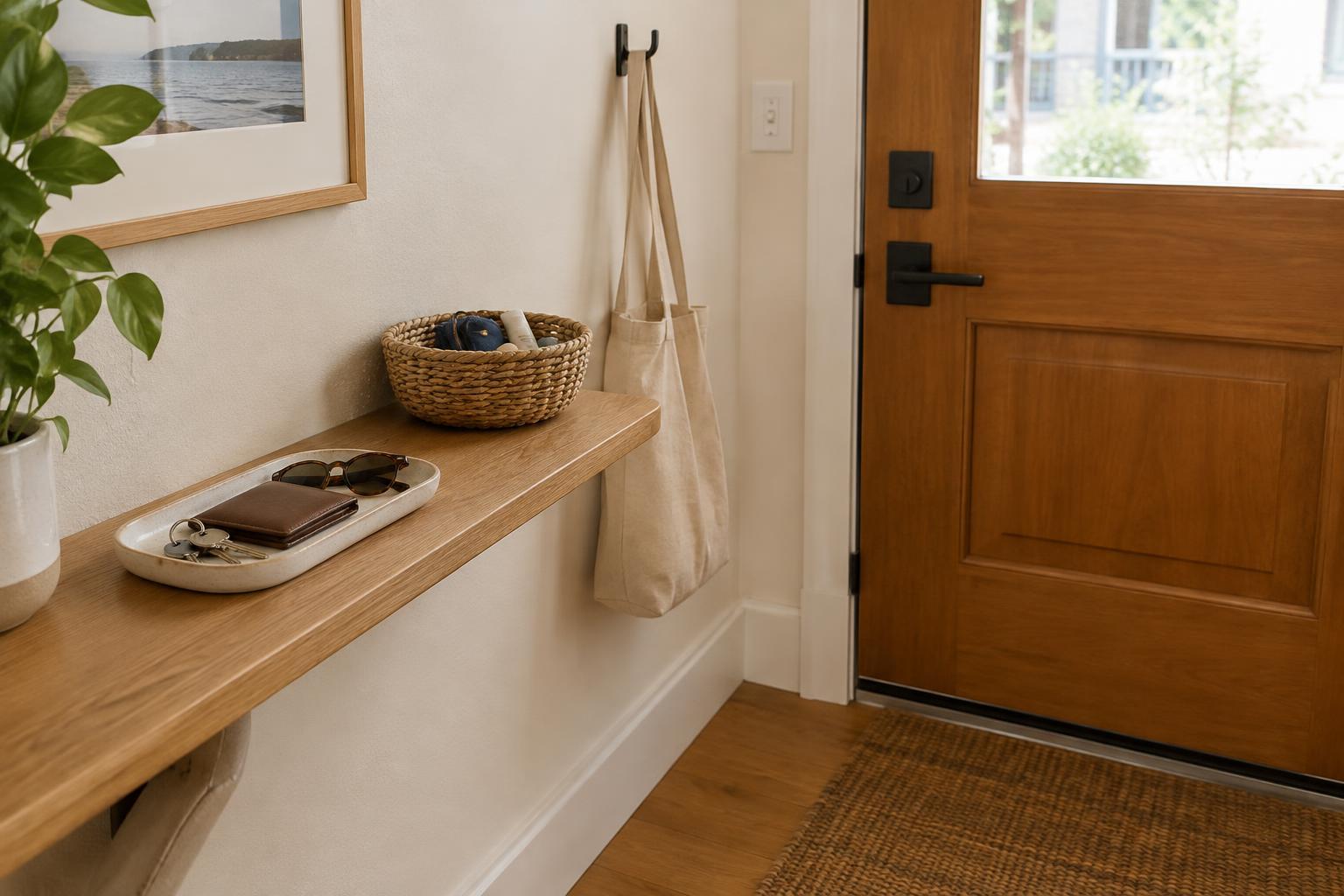
A drop zone is a designated place to put the things you need when you leave home. It does not have to be a built-in entryway or a carefully arranged shelf. A small tray, a hook, and a little clear space may be enough. The goal is to make it easy to set things down when you arrive and find them again when you go.
Start by listing what regularly leaves the house with you: keys, wallet, transit card, badge, sunglasses, bag, or headphones. Then separate those from items you use only occasionally. If everything gets a permanent place by the door, the area can become crowded and harder to use. A drop zone works best when it holds the essentials, not every object that might someday be useful.
During a transition from service to civilian routines, the things you carry and the times you leave home may change. Build the space around your current days rather than a schedule you used to keep or one you think you should have.
Choose a location you will naturally pass
Look for a spot on the route between your usual entrance and the rest of your home. It could be a corner of a kitchen counter, a narrow shelf, the inside of a closet door, or a small table. If you often come in through a side entrance, a polished setup by the front door may go unused. Convenience matters more than appearance.
Make sure the location is comfortable to reach while carrying groceries or a bag. Avoid blocking a walkway or placing loose items where they can be knocked to the floor. In a shared household, consider whether the space will interfere with anyone else’s routine. If you rent or cannot attach hooks to a wall, a freestanding rack, bowl, or removable organizer may be a better fit.
You may also want a less visible location for items you would rather not leave in plain sight. A drawer close to the door can serve the same purpose as an open tray, provided it is just as easy to use.
Give each essential one clear home
Assign a specific place to each item instead of making one pile. Keys might go on a hook, a wallet in a shallow tray, and a work bag on a sturdy chair or floor mat. Keep small things contained so they do not disappear under mail. If several people share the space, separate trays or hooks can make ownership clear without requiring labels.
Think about what needs to leave with you but should not live by the door. A lunch, water bottle, or document may need to stay in the kitchen or at a desk until departure. Rather than crowding the drop zone, use it as a prompt: place a short note there, or set the bag you will carry where you will see it. The reminder should point you to the item, not replace putting it in the bag when it is ready.
Resist buying organizers before you know what the space needs. Try containers and hooks you already own for a week. That trial can show whether you need more room, a better location, or simply fewer things in the area.
Connect the space to arriving and leaving
The setup helps most when you pair it with a brief routine. When you get home, put your keys and wallet in their assigned places before moving on to another task. Empty your pockets of receipts or loose papers, but give those items a separate place to sort later. Otherwise, the drop zone can become an inbox that never gets emptied.
Before leaving, make a quick pass: keys, wallet, phone, and anything specific to that trip. Your list may change by destination, so keep the check flexible. A written reminder near the door can be useful while a new routine takes shape, especially if your schedule varies from day to day.
If you forget to use the drop zone, treat that as feedback rather than failure. Perhaps the hook is too far from where you naturally set down your bag, or the tray is already full. Adjust the setup to match what you do in practice.
Keep it useful with a small reset
Once or twice a week, take a moment to remove what does not belong: old receipts, empty packaging, spare change, and items that have another home. Return borrowed keys or shared equipment to their proper places. A quick reset is usually easier than waiting until the area becomes a sorting project.
Revisit the arrangement when your routine changes. A new class, job, hobby, or volunteer commitment may add something you need to carry regularly. You can make room for it without expanding the drop zone indefinitely by removing an item you no longer use every day.
The best drop zone is not the most elaborate one. It is the place you can use on an ordinary, busy day—and return to without having to think much about it.