Give mail one place to land
Mail often becomes a pile because it arrives at inconvenient moments. You set it down while carrying groceries, leave it on a counter before heading out, or save an envelope to open when you have more energy. None of those choices is a problem on its own. The difficulty comes when several temporary spots turn into places you have to search.
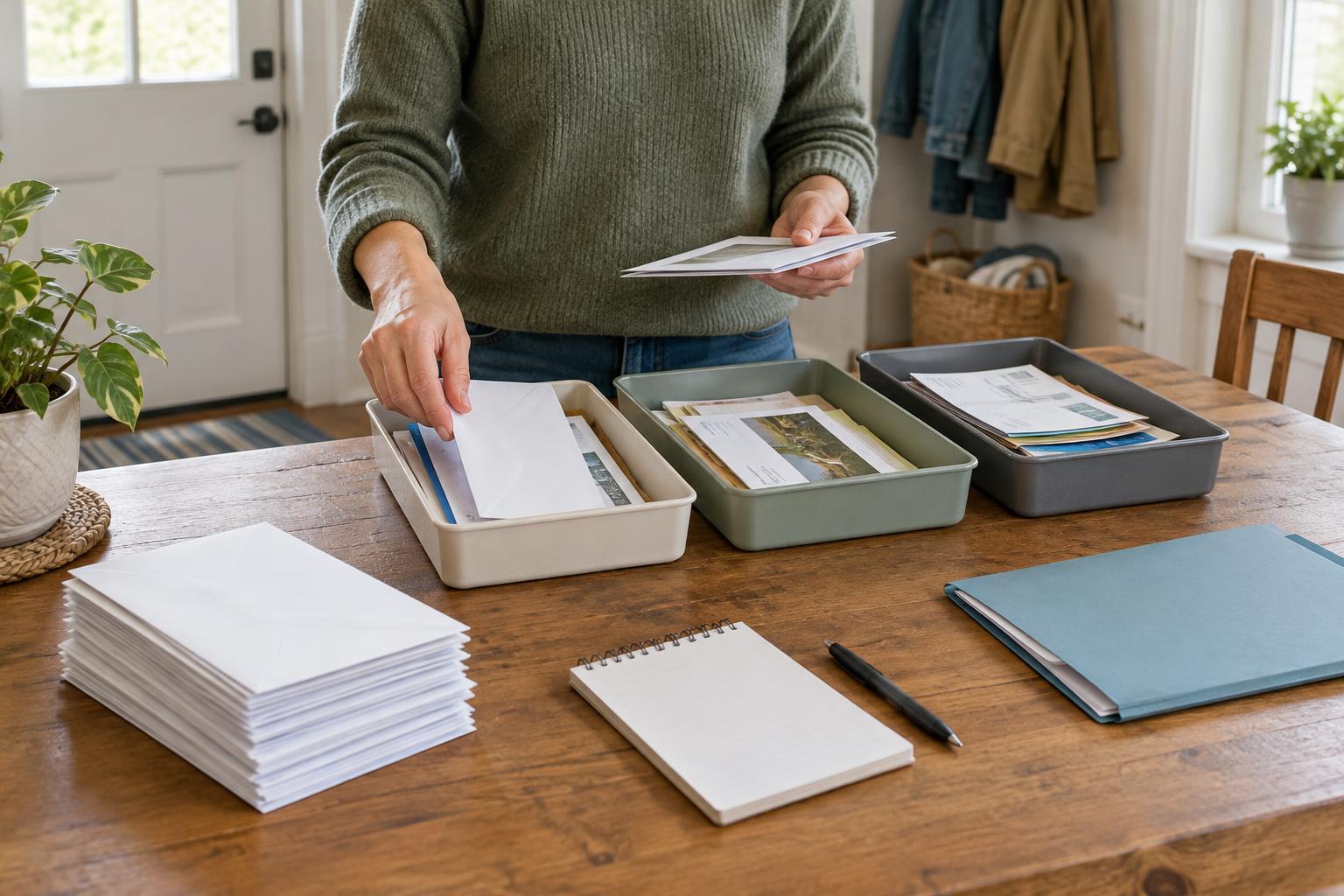
Choose one landing spot near the door or wherever you naturally put down your keys. A tray, shallow box, or clear section of a desk is enough. Its job is to hold new mail, not every paper you own. If other people share your home, let them know where incoming mail goes. A single spot makes it easier to see what has arrived and reduces the chance that an important envelope gets mixed with receipts or old notes.
Use a short first-pass sort
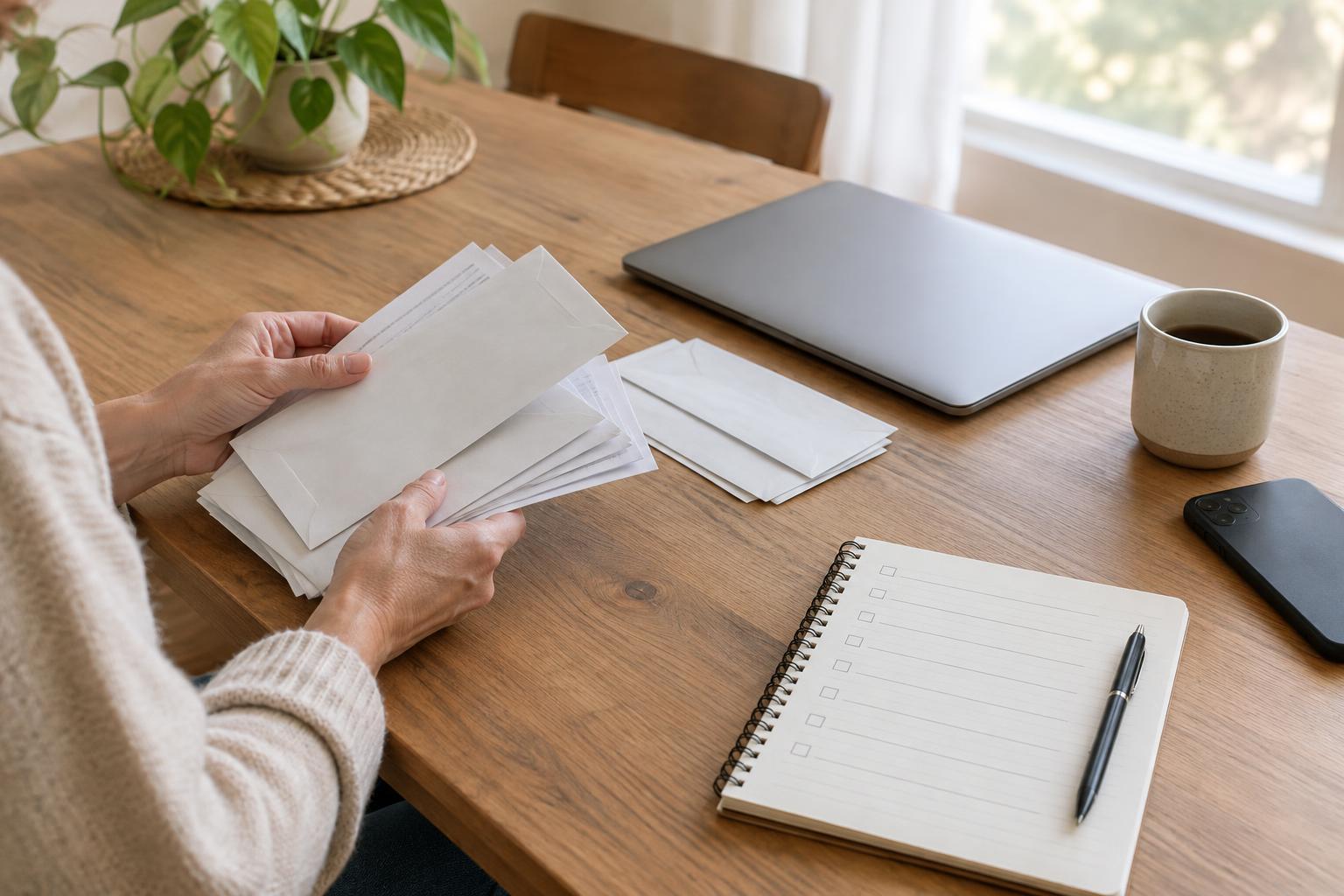
You do not need to handle every letter fully as soon as it arrives. A first pass can take just a few minutes: open what you can, remove packaging, and sort the contents into three groups. Put unwanted material in recycling or the trash, keep reference papers you may need later, and set aside anything that calls for a decision or response. Shred or otherwise dispose of papers containing personal details in a way that fits your household.
The action group is the one to watch. It may contain a form to complete, an appointment notice, a bill to review, or a letter you need to discuss with someone. Check envelopes and pages for any stated dates, but avoid trying to solve every item during the sort. If a document is confusing, keeping it in the action group is better than returning it to an unsorted stack.
Make the next step visible
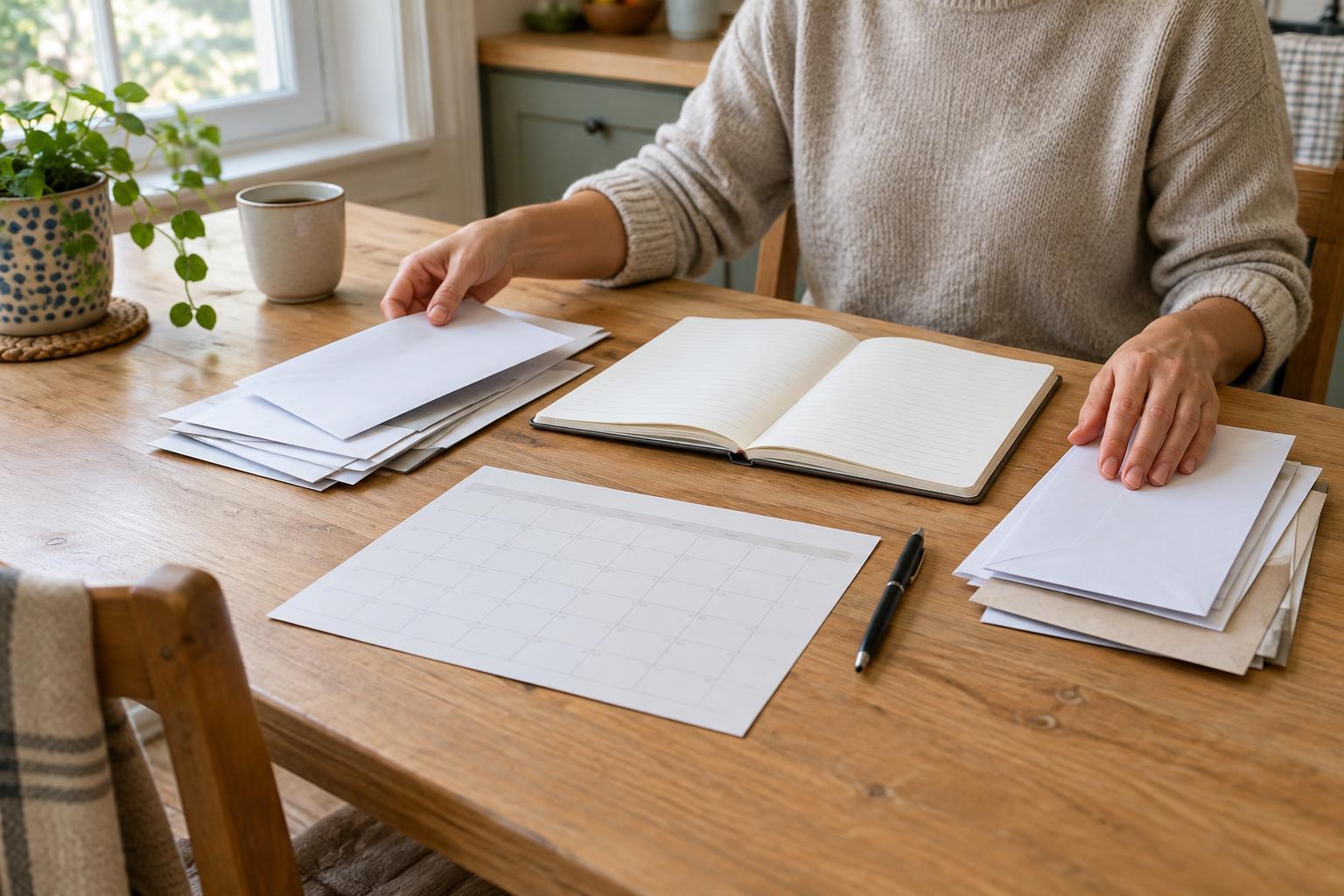
A folder labeled “to do” helps only if you know what to do when you open it. For each action item, add a small note with the next physical step: “find account number,” “call to ask a question,” or “fill in first page.” If there is a date printed on the document, copy it onto the note or into the calendar you already use. Keep the original paper with the note so the details are available when you return to it.
You can divide action items into “soon” and “later” if one folder feels crowded, but avoid creating so many categories that sorting becomes another task. The aim is to make it easy to pick up one piece of paper and know where to begin. This can be especially useful when civilian routines bring mail from several unfamiliar offices or organizations at once.
Keep reference papers separate from active mail
Some documents do not require a response but are worth keeping where you can find them. A simple reference file might have broad sections such as home, work and learning, transportation, and personal records. Use labels that make sense to you rather than building an elaborate system. If you are unsure whether to keep a document, set it in a temporary “review” folder and revisit it during a regular tidy-up.
Keep sensitive records in a place that limits casual access, whether that is a drawer, folder, or other storage space suited to your household. Try not to mix completed paperwork with items still needing attention. Once you have finished an action, move any record you want to retain into the reference file. That small final step prevents the action folder from looking permanently full.
Choose a routine you can repeat
A mail system works best when it fits your week. You might do a quick sort when you come inside and reserve a longer session once or twice a week for action items. Another option is to set a timer for ten minutes and stop when it ends. Consistency matters more than clearing everything in one sitting, especially if paperwork tends to feel draining.
If a pile has already formed, start with the newest mail or the top few inches rather than trying to perfect the whole stack at once. Look first for anything with a stated date, then use the same three groups for the rest. As your routine settles, notice where it breaks down. If papers keep landing somewhere else, move the tray. If the action folder stays untouched, put a short review session on your calendar. The useful system is the one you will actually return to.