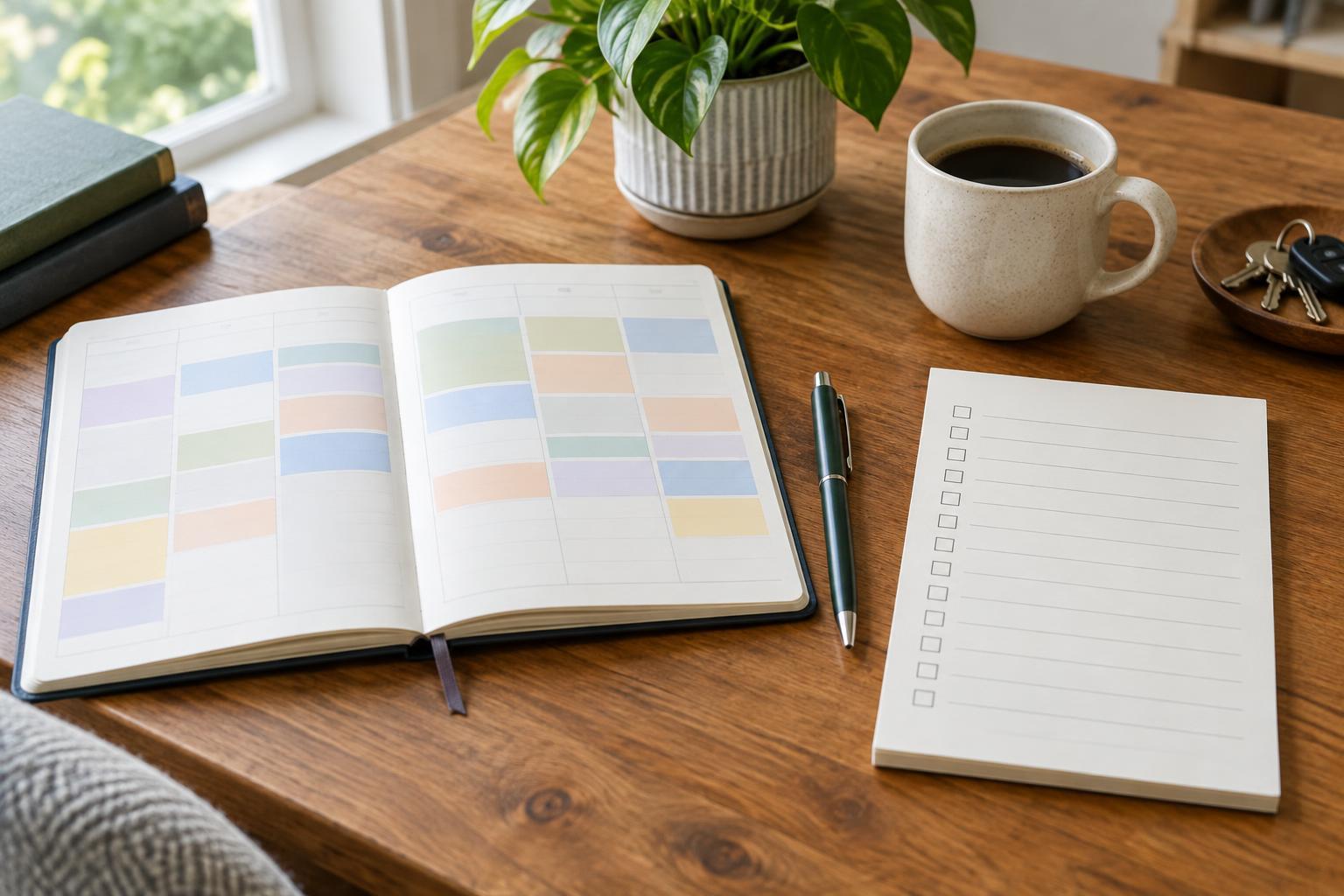
Two tools for different questions
After military service, everyday scheduling may feel less defined. Work, learning, household responsibilities and personal time can all compete for attention, often without a shared timetable. A planning tool can help, but it does not have to recreate a rigid schedule. The useful question is what you need help deciding: what to do, when to do it or both.
A to-do list answers “What needs doing?” You write down tasks and mark them complete as you go. Time blocking answers “When will I work on this?” You reserve a period on a calendar for a task or type of activity. Neither method is inherently better. A list is good at collecting commitments; a block makes you consider how those commitments fit into the hours available.
When a to-do list helps most
A list works well when tasks are small, varied or easy to handle whenever an opening appears. You might list “buy groceries,” “reply to a classmate” and “sort the mail” without needing a separate appointment for each. Keeping these items in one place can also reduce the effort of remembering them. If you are establishing a new routine, a list offers a simple starting point: write things down before trying to schedule everything.
The weakness is that a list can grow faster than you can clear it. It may give a five-minute errand and a two-hour application the same visual weight. To make a list more useful, write tasks as concrete next actions and choose a few priorities for the day. “Gather documents for the application” is easier to begin than “deal with application.” Keep a separate place for ideas and nonurgent tasks so they do not crowd today’s list.
When time blocking helps most
Time blocking can be useful for work that needs sustained attention or has a tendency to get postponed. Reserving 45 minutes to study, update a résumé or organize paperwork gives that work a clear starting point. It also reveals when a plan is too full: if your calendar already contains a shift, travel time and household responsibilities, there may be less room for extra tasks than a long list suggests.
A block is a plan, not a guarantee. Errands run long, energy varies and other people may need your time. Start by blocking fixed commitments, then add a small number of flexible work periods. Include travel, meals and transition time where they matter. If a task is unfamiliar, allow more time than your first guess. For routines that change from week to week, broad blocks such as “household tasks” may be more workable than assigning every minute.
How to combine them without overplanning
You do not have to choose one method for every task. Keep a master list to capture commitments, then put only the tasks that need protected time onto a calendar. For example, your list might hold errands, calls and home projects, while your calendar includes a morning learning block and an afternoon appointment. At the start of the day, look at the time available and select a realistic number of list items to handle around those blocks.
It can help to distinguish between tasks with a deadline, tasks that matter but can move, and tasks that are optional. Put appointments and genuine deadlines where you will see them. Give important, movable work a time block when possible. Leave optional tasks on the list for spare time. This approach keeps your calendar from becoming a record of things you planned but never had a chance to do.
Choose a system you can reset
Try one approach for a week of ordinary activities rather than designing a perfect system in advance. Notice what slips through: forgotten small tasks may call for a better list, while repeatedly delayed projects may need calendar space. A paper notebook, phone calendar or simple document can all work; the best format is one you will actually check.
Set aside a few minutes to review unfinished items and move them deliberately. A missed block does not mean the day failed, and an incomplete list is not a verdict on your effort. Plans are most useful when they can absorb a change of plans. Whether you prefer lists, blocks or a mix, aim for a routine that makes the next step clear while leaving room for the rest of your life.