Start with curiosity, not a commitment
A neighborhood association meeting is a place for residents to discuss shared concerns, exchange ideas and sometimes organize projects. The format varies. One group might focus on a park cleanup or a seasonal event; another might spend most of its time discussing traffic, development or maintenance. Your first meeting is an opportunity to learn how the group works, not a promise to join a committee.
If you are adjusting to civilian routines after military service, the meeting may offer a useful way to get to know your surroundings. It can also feel unfamiliar: the group may have no clear chain of command, and decisions may emerge through conversation rather than a set process. You do not need to compare the two settings or explain your background. Showing up and listening is enough for a first visit.
Find the basic details before you go
Check where and when the group meets, whether the meeting is open to anyone in the neighborhood and whether there is an agenda. A neighborhood notice board, community calendar or association contact may have the details. If information is unclear, a short message asking whether newcomers are welcome is reasonable. You can also ask about accessibility, childcare arrangements or a remote option if any of those would help you attend.
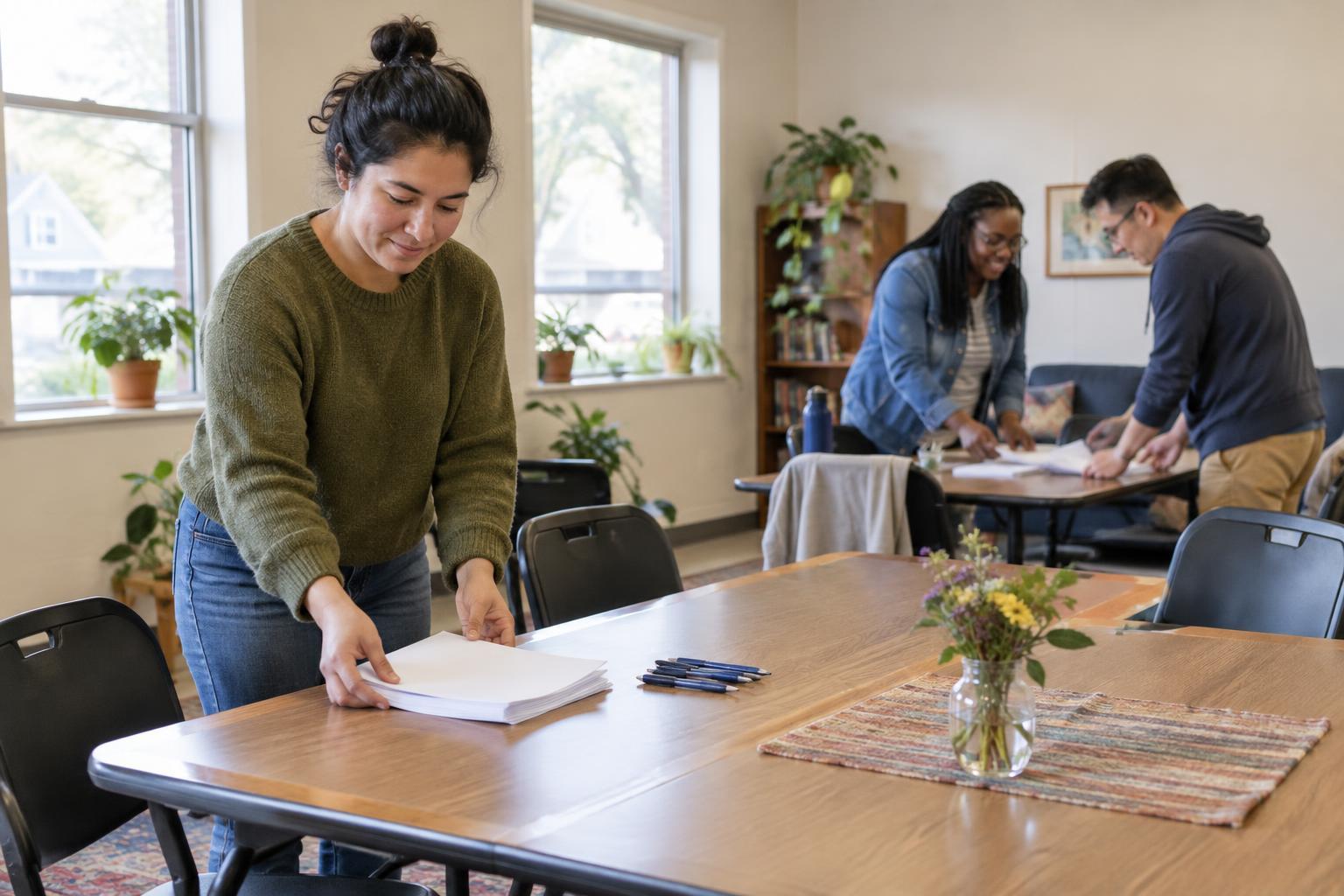
Plan to arrive a few minutes early if you can. That gives you time to find the room, sign in if requested and pick up any printed materials. Some groups collect contact details for meeting updates; you can ask what a sign-in sheet is used for before adding yours. Bringing a notebook can help you keep track of names, topics and questions without trying to remember everything at once.
Follow the meeting at your own pace
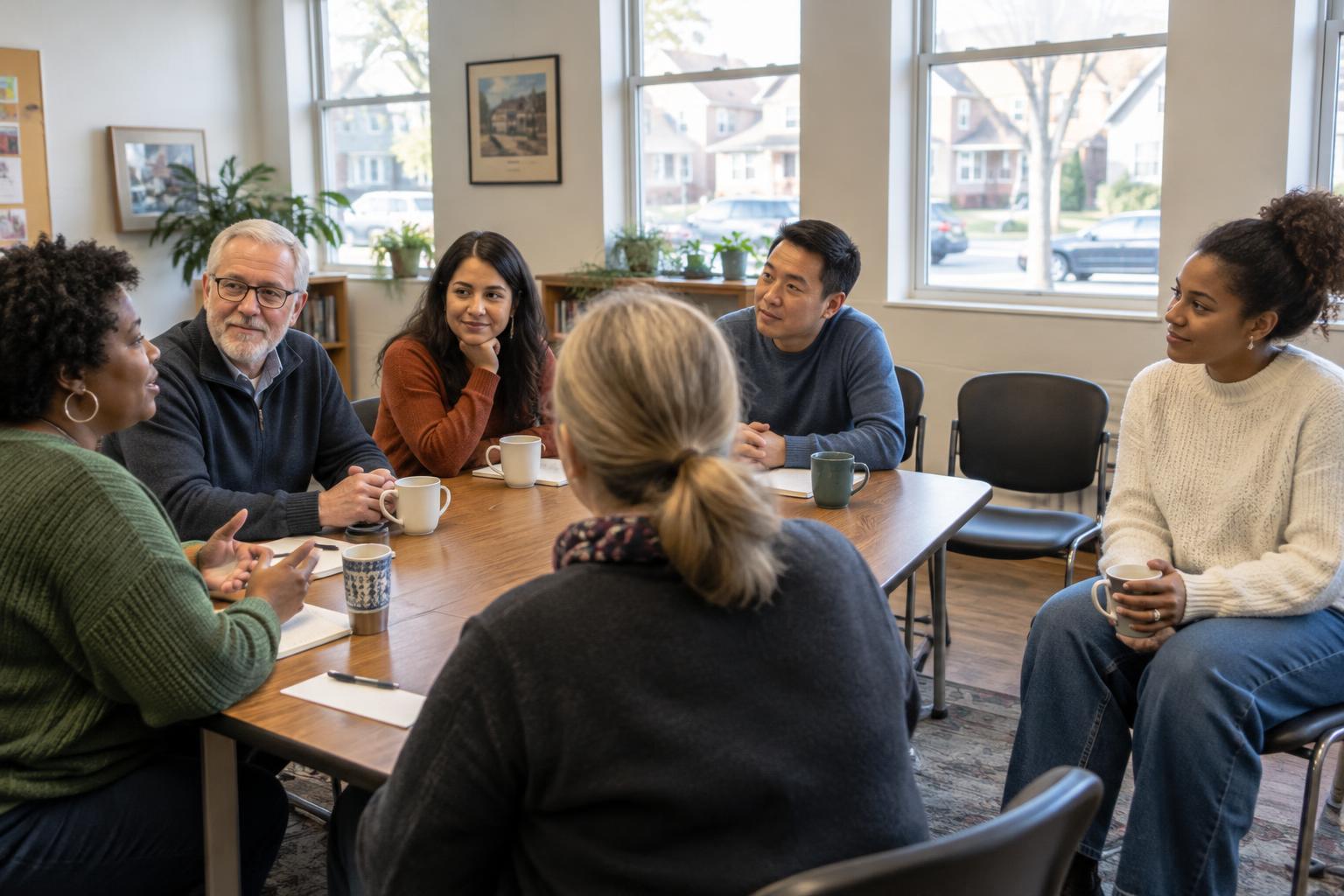
Many meetings begin with introductions or brief updates, then move through agenda items. Someone may facilitate the discussion, take notes or explain how comments are invited. Procedures differ, so watch for a few minutes before speaking. If the group uses an abbreviation or refers to a past decision you do not know, it is fine to ask for context when there is an opening.
You might hear a mix of practical tasks and strongly held opinions. A concern that sounds simple at first may involve several neighbors with different priorities. Listening for the underlying question—what needs to happen, who is affected and what the group can actually do—can make the conversation easier to follow. You are not expected to solve an issue on the spot, even if you have relevant experience.
Introduce yourself without pressure
If introductions go around the room, a sentence or two is plenty: your name, roughly where you live and that you are there to learn more about the neighborhood. You can mention your service if you want to, but it is not required. If someone asks about it and you would rather discuss the meeting, a simple redirect such as “I’m mostly here to hear what the group is working on” is enough.
When you do want to contribute, consider asking a specific, open question. “How do people usually hear about volunteer days?” or “What happened after this topic came up last time?” can help you learn while moving the discussion forward. Skills such as organizing tasks, welcoming newcomers or following through on a plan may be useful here, but there is no need to take charge to make a worthwhile contribution.
Choose a small next step
Before leaving, notice whether the group has a clear way to share updates and whether its activities match your interests and available time. You might introduce yourself to one person, ask how to receive future agendas or offer to help with a single event. It is also reasonable to go home, think about what you heard and attend another meeting before deciding whether to participate further.
A good first step is one you can comfortably repeat. If a task appeals to you, ask what it involves, when it needs to be done and whom you would contact with questions. If the meeting is not a good fit, that does not mean community participation is not for you. A library program, garden group or one-time neighborhood project may offer a different way to connect. The goal is to find a useful place in local life at a pace that works for you.